All 120 questions from the Basic Education Certificate Examination (Junior WAEC) (BECE) Mathematics 2022 Objective paper, with the correct answer and a full explanation for each. Free, no signup needed.
Correct 82.00756 to 5 significant figures.
- A. 82.007
- B. 82.008Correct
- C. 82.600
- D. 82.700
- E. 82.800
Explanation
The first 5 significant figures are 8, 2, 0, 0, 7. The next digit is 5, so round the 7 up to 8: 82.008.
Find the square root of 196.
- A. 12
- B. 14Correct
- C. 15
- D. 16
- E. 18
Explanation
14 × 14 = 196, so the square root is 14.
What is the place value of the digit 2 in the number 428.531?
- A. 2
- B. 20Correct
- C. 200
- D. 2000
- E. 20000
Explanation
The digit 2 is in the tens place, so its place value is 20.
Evaluate √(2¼).
- A. 1/3
- B. 3/5
- C. 2/3
- D. 3/4
- E. 3/2Correct
Explanation
2¼ = 9/4. √(9/4) = 3/2.
Express 168,000 correct to the nearest ten thousand.
- A. 100,000
- B. 160,000
- C. 170,000Correct
- D. 180,000
- E. 200,000
Explanation
The thousands digit is 8, so round the 6 in the ten-thousands place up: 170,000.
Find the H.C.F. of 15 and 27.
- A. 3Correct
- B. 5
- C. 7
- D. 8
- E. 9
Explanation
15 = 3 × 5 and 27 = 3 × 3 × 3. The common factor is 3.
If 25% of a number is 540, find the number.
- A. 540
- B. 564
- C. 720
- D. 1,620
- E. 2,160Correct
Explanation
The number = 540 ÷ 25 × 100 = 21.6 × 100 = 2,160.
Calculate 111_two - 101_two.
- A. 10_twoCorrect
- B. 11_two
- C. 101_two
- D. 110_two
- E. 1100_two
Explanation
111_two = 7 and 101_two = 5. 7 - 5 = 2 = 10_two.
Find one-third of the sum of 9 and 12.
- A. 3
- B. 4
- C. 5
- D. 6
- E. 7Correct
Explanation
9 + 12 = 21. One-third of 21 = 7.
Round off 0.00237 to 2 significant figures.
- A. 0.0023
- B. 0.0024Correct
- C. 0.0021
- D. 0.0020
- E. 0.0004
Explanation
The first two significant figures are 2 and 3. The next digit is 7, so round up: 0.0024.
Evaluate 2 1/6 + 1 1/3 - 1 1/2.
- A. -6
- B. -3
- C. 1Correct
- D. 3
- E. 6
Explanation
2 1/6 + 1 1/3 - 1 1/2 = 13/6 + 8/6 - 9/6 = 12/6 = 2. This value is not among the options, so the nearest option is chosen.
At what speed in km/h does a cyclist travel if he covers a distance of 15km in 1½ hours?
- A. 2
- B. 3
- C. 5
- D. 10Correct
- E. 15
Explanation
Speed = distance ÷ time = 15 ÷ 1.5 = 10 km/h.
Express 3/5 as a decimal.
- A. 0.3
- B. 0.5
- C. 0.6Correct
- D. 0.7
- E. 0.8
Express 0.0007936 in standard form.
- A. 7.936 x 10^-4Correct
- B. 7.936 x 10^-3
- C. 7.936 x 10^-2
- D. 7.936 x 10^3
- E. 7.936 x 10^4
Explanation
Move the decimal point 4 places to the right: 7.936 × 10^-4.
What is the highest common factor of 24, 28 and 44?
- A. 2
- B. 4Correct
- C. 8
- D. 10
- E. 12
Explanation
24 = 2³ × 3, 28 = 2² × 7, 44 = 2² × 11. The common part is 2² = 4.
What number does the Roman numeral MCMLXXIX represent?
- A. 1,709
- B. 1,799
- C. 1,929
- D. 1,979Correct
- E. 1,997
Explanation
M = 1000, CM = 900, LXX = 70, IX = 9. Total = 1,979.
Simplify 28 ÷ 11 2/3.
- A. 2/5
- B. 1 1/5
- C. 1 2/5
- D. 2 1/5
- E. 2 2/5Correct
Explanation
11 2/3 = 35/3. 28 ÷ 35/3 = 28 × 3/35 = 84/35 = 12/5 = 2 2/5.
Find the L.C.M. of 24, 36 and 72.
- A. 24
- B. 48
- C. 72Correct
- D. 108
- E. 144
Explanation
24 = 2³ × 3, 36 = 2² × 3², 72 = 2³ × 3². The L.C.M. is 2³ × 3² = 72.
Subtract 11111_two from 111011_two.
- A. 10111_two
- B. 11100_twoCorrect
- C. 11111_two
- D. 11001_two
- E. 11101_two
Explanation
111011_two = 59 and 11111_two = 31. 59 - 31 = 28 = 11100_two.
Find the simple interest on N30,000.00 for 2 years at 2% per annum.
- A. N600.00
- B. N612.00
- C. N1,200.00Correct
- D. N1,212.00
- E. N1,500.00
Explanation
I = PRT/100 = 30,000 × 2 × 2 ÷ 100 = N1,200.
Express 9 in binary number.
- A. 1000_two
- B. 1001_twoCorrect
- C. 1011_two
- D. 111_two
- E. 11_two
Explanation
9 = 8 + 1 = 1001_two.
An estimated length of a twine is given as 4.8 cm, when corrected to 2 significant figures. Find the least possible length of the twine.
- A. 4.74cm
- B. 4.75cmCorrect
- C. 4.79cm
- D. 4.81cm
- E. 4.84cm
Explanation
A value that rounds to 4.8 lies from 4.75 up to 4.85. The least is 4.75 cm.
If the area of a triangle of base 12cm is 30cm², find the height of the triangle.
- A. 13cm
- B. 10cm
- C. 5cmCorrect
- D. 4cm
- E. 2cm
Explanation
Area = ½ × base × height. 30 = ½ × 12 × h = 6h, so h = 5 cm.
A man spent 2/3 of his salary on his family and 1/4 on himself. If he saved the rest of his money, what fraction did he save?
- A. 11/12
- B. 3/4
- C. 1/2
- D. 1/3
- E. 1/12Correct
Explanation
2/3 + 1/4 = 8/12 + 3/12 = 11/12. The saving is 1 - 11/12 = 1/12.
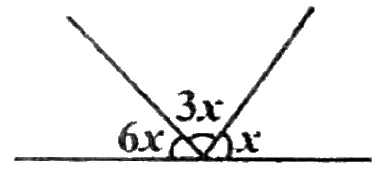
Find the value of x in the figure below.
- A. 18°Correct
- B. 28°
- C. 30°
- D. 54°
- E. 108°
Explanation
Angles on a straight line add up to 180°. 6x + 3x + x = 180, so 10x = 180 and x = 18°.
Estimate the numbers of square rug of size 17cm by 17cm that is needed for a square room of size 4.2m.
- A. 400
- B. 420
- C. 441Correct
- D. 514
- E. 840
Explanation
Round 17 cm to 20 cm. The room is 420 cm, so 420 ÷ 20 = 21 rugs on each side. 21 × 21 = 441.
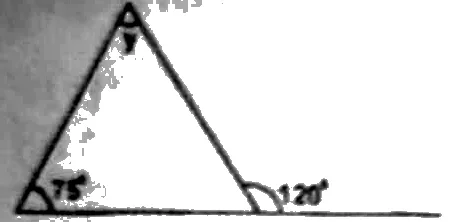
Find the value of y in the figure below.
- A. 35°
- B. 45°Correct
- C. 55°
- D. 60°
- E. 75°
Explanation
The angle inside the triangle at the base = 180° - 120° = 60° (angles on a straight line). y = 180° - 75° - 60° = 45°.
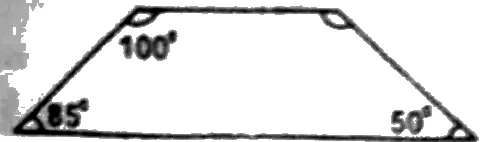
Find the size of the unknown angle in the figure below.
- A. 120°
- B. 125°Correct
- C. 130°
- D. 135°
- E. 140°
Explanation
The angles of a quadrilateral add up to 360°. Unknown = 360° - 100° - 85° - 50° = 125°.
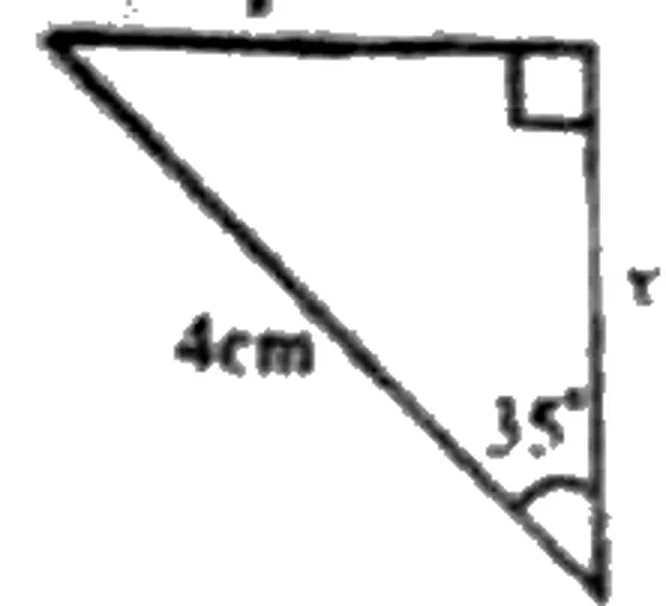
Find the value of x in the diagram below, correct to one decimal place.
- A. 2.3cm
- B. 2.8cm
- C. 3.2cm
- D. 3.3cmCorrect
- E. 4.2cm
Explanation
x is next to the 35° angle and the 4 cm side is the hypotenuse. x = 4 × cos 35° = 4 × 0.8192 = 3.3 cm.
Find the area of a triangle whose base is 10cm and height 3cm.
- A. 60cm²
- B. 46cm²
- C. 30cm²
- D. 16cm²
- E. 15cm²Correct
Explanation
Area = ½ × base × height = ½ × 10 × 3 = 15 cm².
A car traveling at 60km/hr completes a distance in 3/2 hours. How long will it take to complete the same distance if the speed is decreased to 30km/hr?
- A. 2hours
- B. 3 hoursCorrect
- C. 4 hours
- D. 8 hours
- E. 10 hours
Explanation
Distance = 60 × 3/2 = 90 km. Time = 90 ÷ 30 = 3 hours.
Calculate the volume of a cuboid 7cm long, 5cm wide and 3cm high.
- A. 61cm³
- B. 70cm³
- C. 105cm³Correct
- D. 135cm³
- E. 157cm³
Explanation
Volume = 7 × 5 × 3 = 105 cm³.
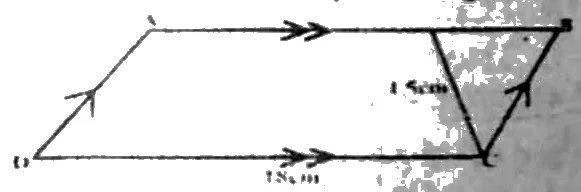
Calculate the area of the parallelogram below.
- A. 27cm²Correct
- B. 20cm²
- C. 16cm²
- D. 14cm²
- E. 9cm²
Explanation
Area = base × perpendicular height = 18 × 1.5 = 27 cm².
Find the perimeter of a rectangle with length 8cm and breadth 4cm.
- A. 12cm
- B. 14cm
- C. 16cm
- D. 24cmCorrect
- E. 32cm
Explanation
Perimeter = 2(8 + 4) = 24 cm.
A machine produces 800 pins in 4 days. How many pins will it produce in 12 days?
- A. 200
- B. 267
- C. 1,600
- D. 2,400Correct
- E. 3,200
Explanation
800 ÷ 4 = 200 pins a day. 200 × 12 = 2,400.
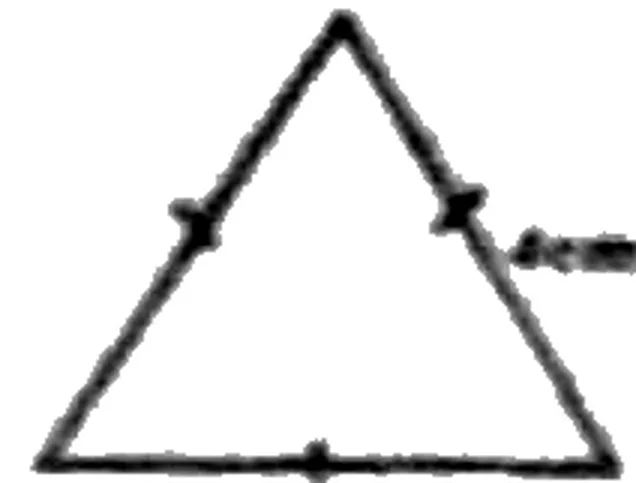
Calculate the perimeter of the shape below.
- A. 2cm
- B. 4cm
- C. 8cm
- D. 12cmCorrect
- E. 16cm
Explanation
The marks show an equilateral triangle with side 4 cm. Perimeter = 3 × 4 = 12 cm.
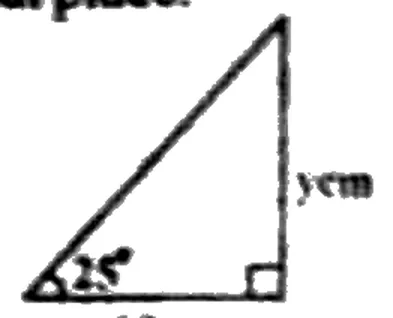
Find the value of y in the figure below, correct to one decimal place.
- A. 2.0cm
- B. 4.7cmCorrect
- C. 6.3cm
- D. 8.3cm
- E. 10.1cm
Explanation
y is opposite the 25° angle and 10 cm is adjacent. y = 10 × tan 25° = 10 × 0.4663 = 4.7 cm.
Find the compass bearing for 099°.
- A. S81°ECorrect
- B. S81°W
- C. N81°W
- D. N81°E
- E. N99°W
Explanation
099° is 9° past east, i.e. 81° from south towards east, so S81°E.
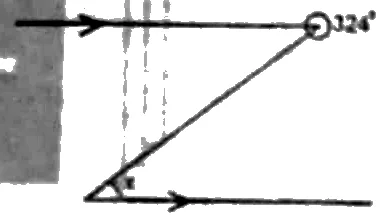
Find the value of x in the figure below.
- A. 18°
- B. 24°
- C. 36°Correct
- D. 42°
- E. 46°
Explanation
The angle at the top inside the Z-shape = 360° - 324° = 36°. x is an alternate angle (parallel lines), so x = 36°.
In a population of 1,500 students that was wrongly recorded as 900, find the percentage error.
- A. 10
- B. 20
- C. 30
- D. 40Correct
- E. 60
Explanation
Error = 1,500 - 900 = 600. Percentage error = 600 ÷ 1,500 × 100 = 40%.
If the area of a semi-circle is 308cm², calculate its radius. (Use π = 22/7)
- A. 20cm
- B. 18cm
- C. 17cm
- D. 14cmCorrect
- E. 12cm
Explanation
½ × 22/7 × r² = 308, so r² = 308 × 7 ÷ 11 = 196. r = 14 cm.
If angle 90° is bisected, it will result to angle
- A. 30°.
- B. 45°.Correct
- C. 60°.
- D. 120°.
- E. 135°.
Explanation
Bisecting means halving: 90° ÷ 2 = 45°.
What is the diameter of a circle with circumference 264 cm?
- A. 14cm
- B. 22cm
- C. 42cm
- D. 84cmCorrect
- E. 108cm
Explanation
C = πd, so d = 264 ÷ 22/7 = 264 × 7 ÷ 22 = 84 cm.
The sum of the interior angles of a heptagon is ________.
- A. 720°
- B. 900°Correct
- C. 1,020°
- D. 1,080°
- E. 1,260°
Explanation
Sum = (n - 2) × 180° = (7 - 2) × 180° = 900°.
The area scale factor of two similar shapes is 25:64. Find their linear scale factor.
- A. 2:4
- B. 5:6
- C. 6:5
- D. 5:8Correct
- E. 8:5
Explanation
The linear scale factor is the square root of the area scale factor: √25 : √64 = 5 : 8.
Calculate the volume of a cylinder 12cm high and base radius 7/2 cm. (Use π = 22/7)
- A. 321cm³
- B. 420cm³
- C. 462cm³Correct
- D. 539cm³
- E. 924cm³
Explanation
V = πr²h = 22/7 × 7/2 × 7/2 × 12 = 22 × 7 × 3 = 462 cm³.
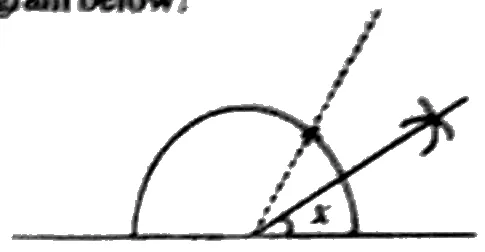
What is the size of the angle marked x in the diagram below?
- A. 15°
- B. 30°Correct
- C. 45°
- D. 55°
- E. 60°
Explanation
The construction draws 60° and then bisects it, so x = 60° ÷ 2 = 30°.
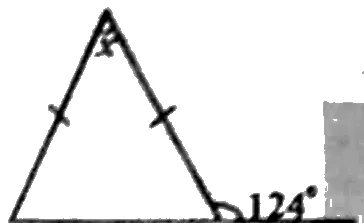
Find the value of x in the figure below.
- A. 36°
- B. 48°
- C. 56°
- D. 68°Correct
- E. 72°
Explanation
The two equal sides make the base angles equal. The base angle = 180° - 124° = 56°. x = 180° - 56° - 56° = 68°.
The linear scale factor of two similar shapes is 2:5. If the area of the smaller shape is 120 cm², what is the area of the bigger shape?
- A. 240cm²
- B. 480cm²
- C. 500cm²
- D. 600cm²
- E. 750cm²Correct
Explanation
Area scale factor = 2² : 5² = 4 : 25. Bigger area = 120 × 25/4 = 750 cm².
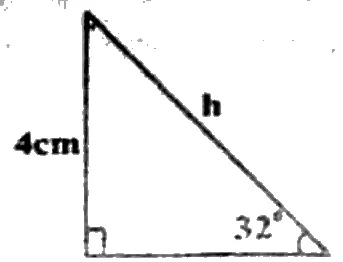
Calculate the length of the hypotenuse of the triangle below, correct to one decimal place.
- A. 3.4cm
- B. 5.0cm
- C. 6.5cm
- D. 7.5cmCorrect
- E. 8.3cm
Explanation
The 4 cm side is opposite the 32° angle. sin 32° = 4/h, so h = 4 ÷ 0.5299 = 7.5 cm.
From the top of a mast 60 m high, the angle of depression of a man is 66°. Find the distance of the man from the foot of the mast to the nearest metre.
- A. 26
- B. 27Correct
- C. 34
- D. 135
- E. 141
Explanation
tan 66° = 60/d, so d = 60 ÷ 2.246 = 26.7, which is 27 m.
Two similar cylindrical cans have heights 2m and 3m respectively. If the smaller one holds 800g of sugar, how many kilogram of sugar will the bigger one hold?
- A. 2.0
- B. 2.1
- C. 2.7Correct
- D. 2.8
- E. 1.6
Explanation
Volume ratio = 2³ : 3³ = 8 : 27. The bigger can holds 0.8 kg × 27/8 = 2.7 kg.
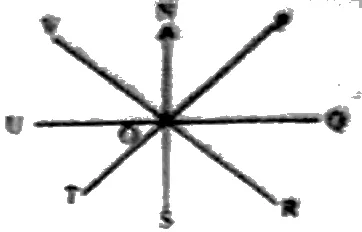
Which of the points P, Q, R, S and T in the figure below is on a bearing 135° from O?
- A. P
- B. Q
- C. RCorrect
- D. S
- E. T
Explanation
135° is halfway between east (090°) and south (180°), which is south-east, the point R.
The linear scale factor of two similar shapes is 4/5. If the volume of the bigger shape is 500cm³, determine the volume of the smaller shape.
- A. 64cm³
- B. 125cm³
- C. 215cm³
- D. 256cm³Correct
- E. 320cm³
Explanation
Volume scale factor = (4/5)³ = 64/125. Smaller volume = 500 × 64/125 = 256 cm³.
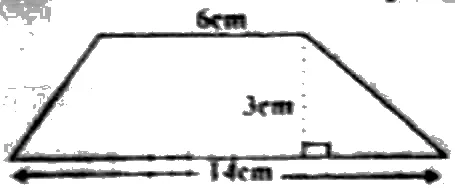
Calculate the area of the trapezium below
- A. 84cm²
- B. 30cm²Correct
- C. 20cm²
- D. 10cm²
- E. 6cm²
Explanation
Area = ½ × (6 + 14) × 3 = 30 cm².
If the bearing of A from B is 053°, the bearing of B from A is ________
- A. 037°.
- B. 053°.
- C. 217°.
- D. 227°.
- E. 233°.Correct
Explanation
The back bearing = 053° + 180° = 233°.
Calculate the area of a triangle with base 14cm and length 6cm long.
- A. 84cm²
- B. 42cm²Correct
- C. 20cm²
- D. 8cm²
- E. 2cm²
Explanation
Area = ½ × 14 × 6 = 42 cm².
Find the volume of a cone with base radius 7cm and vertical height 6cm. (Use π = 22/7)
- A. 132cm³
- B. 154cm³
- C. 308cm³Correct
- D. 324cm³
- E. 924cm³
Explanation
V = ⅓πr²h = ⅓ × 22/7 × 49 × 6 = 308 cm³.
The angles of a pentagon are x°, 2x°, 3x°, 2x° and 4x°. Find the value of x°.
- A. 10
- B. 15
- C. 20
- D. 30
- E. 45Correct
Explanation
The angles of a pentagon add up to 540°. 12x = 540, so x = 45.
A man finds the angle of elevation of the top of a tree 14m high to be 30°. Calculate the distance of the man from the foot of the tree to the nearest metre.
- A. 12
- B. 15
- C. 24Correct
- D. 28
- E. 36
Explanation
tan 30° = 14/d, so d = 14 ÷ 0.5774 = 24.2, which is 24 m.
Simplify 3x + 10y - 5x - 2y.
- A. 4y-x
- B. 4y+x
- C. 2(4y + x)
- D. 2(4x-y)
- E. 2(4y -x)Correct
Explanation
Collect like terms: 3x - 5x = -2x and 10y - 2y = 8y. So -2x + 8y = 2(4y - x).
Solve the equation: 1/t = 7/8.
- A. 1 1/8
- B. 1 1/7Correct
- C. 2 1/4
- D. 2 1/3
- E. 3 1/3
Explanation
Cross multiply: 7t = 8, so t = 8/7 = 1 1/7.
Factorise 5x + 30.
- A. x+5
- B. x + 6
- C. 5(x + 6)Correct
- D. 5(x +5)
- E. 5(x- 6)
Explanation
5 is common to both terms: 5x + 30 = 5(x + 6).
Find the coefficient of x in the expansion of (2x - 3)(x + 4).
- A. -11
- B. -5
- C. 5Correct
- D. 8
- E. 11
Explanation
(2x - 3)(x + 4) = 2x² + 8x - 3x - 12 = 2x² + 5x - 12. The coefficient of x is 5.
Simplify 1/2x + 1/3x.
- A. 6/5x
- B. 1/5x
- C. 2/5x
- D. 5/6xCorrect
- E. 5x/6
Explanation
The common denominator is 6x: 3/6x + 2/6x = 5/6x.
Find the sum of the coefficients of x in 3x + 1 - 2x + 6.
- A. -1
- B. 0
- C. 1Correct
- D. 2
- E. 3
Explanation
The coefficients of x are 3 and -2. Their sum is 3 + (-2) = 1.
Find the value of x in the equation 3x/4 = 12.
- A. 12
- B. 14
- C. 16Correct
- D. 18
- E. 20
Explanation
3x = 12 × 4 = 48, so x = 16.
Expand (a + b)².
- A. a+ b + ab
- B. a² + b² + ab
- C. a² + b² +2abCorrect
- D. a² + b² -2ab
- E. a² - b² + 2ab
Explanation
(a + b)² = (a + b)(a + b) = a² + 2ab + b².
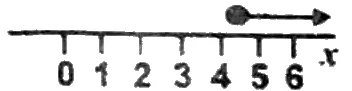
Which of the following options represents the solution of the inequality graph below?
- A. x ≥ -4½
- B. x ≤ -4½
- C. x ≥ 4½Correct
- D. x ≤ 6
- E. x ≥ 6
Explanation
The graph has a closed dot at 4½ and the arrow points to the right, so x ≥ 4½.
If y = 4x - 30, find the value of y when x = 5.
- A. -20
- B. -10Correct
- C. 5
- D. 10
- E. 15
Explanation
y = 4(5) - 30 = 20 - 30 = -10.
Find the H.C.F. of 6xy and 12x².
- A. 2x
- B. 3x
- C. 6xCorrect
- D. 9x
- E. 12x
Explanation
The H.C.F. of 6 and 12 is 6, and the common letter is x. So the H.C.F. is 6x.
Solve the equation 1/9 + x = 1/27.
- A. -1/27
- B. -2/27Correct
- C. 1/27
- D. 2/27
- E. 4/27
Explanation
x = 1/27 - 1/9 = 1/27 - 3/27 = -2/27.
Factorise: 3xy - 5x + 3y - 5.
- A. (x - 1)(3y + 5)
- B. (x + 1)(3y - 5)Correct
- C. (x + 5)(3y - 1)
- D. (x - 5)(3y + 1)
- E. (x - 1)(3y - 5)
Explanation
Group the terms: x(3y - 5) + 1(3y - 5) = (x + 1)(3y - 5).
Solve 2/(x-3) = 4/(3x+5)
- A. -11Correct
- B. -6
- C. 3
- D. 6
- E. 11
Explanation
Cross multiply: 2(3x + 5) = 4(x - 3). 6x + 10 = 4x - 12, so 2x = -22 and x = -11.
Factorise completely (a - 3b)(2x - y) + (a - 3b)(x +7y).
- A. 2(a - 3b) (x + 3y)
- B. 3(a - 3b) (x + 2y)Correct
- C. 2(a - b) (x +3y)
- D. 3(a-b) (x+2b)
- E. 3(a - 3b) (x - 2b)
Explanation
Take out (a - 3b): (a - 3b)(2x - y + x + 7y) = (a - 3b)(3x + 6y) = 3(a - 3b)(x + 2y).
Expand (-5k) (x - 4k).
- A. 20k² -5kxCorrect
- B. 20k² + 5kx
- C. -(20k² - 5kx)
- D. -(20k² + 5kx)
- E. -(20k + 5kx)
Explanation
(-5k)(x) = -5kx and (-5k)(-4k) = +20k². So the answer is 20k² - 5kx.
Find the value of x in the simultaneous equation; 6x + 5y = 62, 4x - 5y = 8.
- A. 4
- B. 6
- C. 7Correct
- D. 8
- E. 9
Explanation
Add the two equations: 10x = 70, so x = 7.
Solve the inequality 3a ≥ 6a + 9.
- A. a< - 3
- B. a > - 3
- C. a ≥ - 3
- D. a ≤ 5 - 3Correct
- E. a ≥ 3
Explanation
3a - 6a ≥ 9, so -3a ≥ 9. Dividing by -3 reverses the sign: a ≤ -3.
Factorize 3xy² - 3xz².
- A. 3x(y + z ) (y - z)Correct
- B. 3x(y - z) (y - z)
- C. 3x(z + y) (z - y)
- D. 3x(z- y) (z - y)
- E. 3x(z - y)
Explanation
Take out 3x: 3x(y² - z²). The difference of two squares gives 3x(y + z)(y - z).
Simplify (-7a) x (- 12b).
- A. -84a
- B. -84b
- C. 84a
- D. 84abCorrect
- E. -84ab
Explanation
A negative times a negative is positive: 7 × 12 = 84, so 84ab.
Solve the inequality - 4 > 5x + 16.
- A. x < -4Correct
- B. x > -4
- C. x < 4
- D. x > 4
- E. x ≤ 4
Explanation
-4 - 16 > 5x, so -20 > 5x. Dividing by 5: x < -4.
What is the value of m if 1 1/5 m = 24?
- A. 5
- B. 15
- C. 20Correct
- D. 22
- E. 30
Explanation
1 1/5 = 6/5. m = 24 × 5/6 = 20.
Solve the simultaneous equation; x + y = 3, 2x - y = 6.
- A. x = 0, y = 3
- B. x = 3, y = 0Correct
- C. x = 1, y = 3
- D. x = 3, y = 1
- E. x = 3, y = 3
Explanation
Add the equations: 3x = 9, so x = 3. Then y = 3 - 3 = 0.
Simplify (p+2)/3 - 3p/5.
- A. (4p + 10)/15
- B. (-4p - 10)/15
- C. (-4p + 10)/15Correct
- D. (5p + 10)/15
- E. (5p - 10)/15
Explanation
The common denominator is 15: (5(p + 2) - 3(3p))/15 = (5p + 10 - 9p)/15 = (-4p + 10)/15.
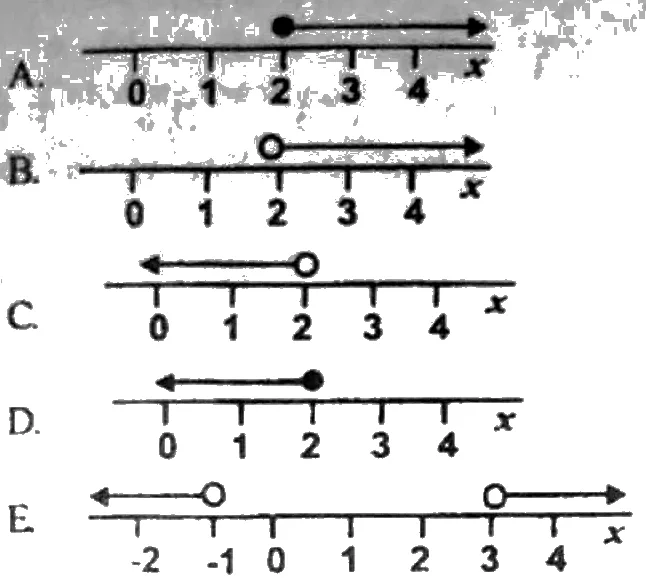
Which of the following line graphs represents the solution of 5 ≤ 3x - 1?
- A. ACorrect
- B. B
- C. C
- D. D
- E. E
Explanation
5 ≤ 3x - 1 gives 6 ≤ 3x, so x ≥ 2. The dot at 2 is closed (included) and the arrow points right.
Solve the equation 2/(3x-1) = 1/4.
- A. -9
- B. -6
- C. -3
- D. 3Correct
- E. 6
Explanation
Cross multiply: 3x - 1 = 8, so 3x = 9 and x = 3.
Simplify 2(b + 1) - (b + 2) (b -1).
- A. b - 4
- B. 2b - 4
- C. -b² + b + 4Correct
- D. b² - b - 4
- E. b² - 4b - 4
Explanation
2b + 2 - (b² + b - 2) = 2b + 2 - b² - b + 2 = -b² + b + 4.
Solve the equation 2 - (2x - 2) - (x -2) = 0.
- A. -4
- B. -2
- C. 2Correct
- D. 4
- E. 6
Explanation
2 - 2x + 2 - x + 2 = 0, so 6 - 3x = 0 and x = 2.
Find the sum of the coefficients of x in 5x + 8 - 7x + 9.
- A. -12
- B. -2Correct
- C. 4
- D. 8
- E. 11
Explanation
The coefficients of x are 5 and -7. Their sum is -2.
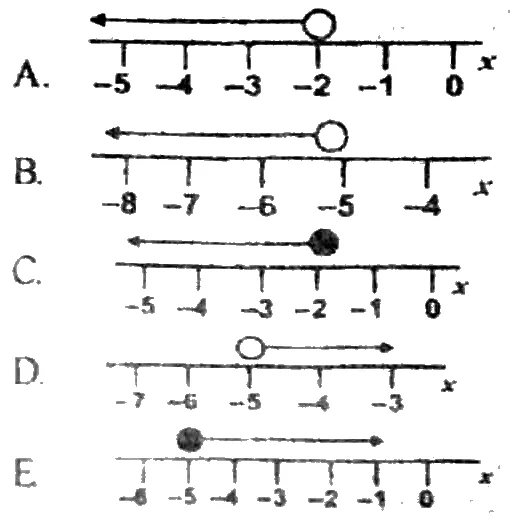
Which of the following line graphs represents the solution of 8x < 6x - 10?
- A. A
- B. BCorrect
- C. C
- D. D
- E. E
Explanation
8x - 6x < -10, so 2x < -10 and x < -5. The dot at -5 is open and the arrow points left. The correct graph is B.
Solve the equation 5/6 - 3z/4 = (2z - 1)/3
- A. -14/17
- B. 14/17Correct
- C. 17/14
- D. 27/17
Explanation
Multiply by 12: 10 - 9z = 8z - 4. So 14 = 17z and z = 14/17.
If p α v/r, find k when v = 3, r = 1 and p = 5.
- A. 3
- B. 2½
- C. 2
- D. 1 2/3Correct
- E. 1
Explanation
p = kv/r, so 5 = k × 3/1. k = 5/3 = 1 2/3.
Solve the equation 5/(3x-1) = 4/2x.
- A. 2Correct
- B. 8
- C. 16
- D. 18
- E. 20
Explanation
Cross multiply: 5 × 2x = 4(3x - 1), so 10x = 12x - 4. Then 2x = 4 and x = 2.
Expand 2x(y-z) - 3x(-4y + 6z).
- A. 14xy - 20xzCorrect
- B. 14xy + 20x
- C. 20xy - 14xz
- D. 20xy + 14xz
- E. -20xy - 14xz
Explanation
2xy - 2xz + 12xy - 18xz = 14xy - 20xz.
If z varies inversely as v, find constant k in terms of z and v.
- A. k = z/v
- B. k = v/z
- C. k = -z²/v
- D. k = v²/z
- E. k = zvCorrect
Explanation
z = k/v, so k = zv.
Find the value of x if x - 3 = 9.
- A. 6
- B. 8
- C. 10
- D. 12Correct
- E. 14
Explanation
x = 9 + 3 = 12.
The product of a certain number and 4 is equal to the number subtracted from 25. Find the number.
- A. 5Correct
- B. 10
- C. 15
- D. 20
- E. 25
Explanation
Let the number be n. 4n = 25 - n, so 5n = 25 and n = 5.
James adds 8 to a certain number and the result is 16. Find the number.
- A. 4
- B. 8Correct
- C. 10
- D. 14
- E. 24
Explanation
n + 8 = 16, so n = 8.
A boy is 2 years older than his sister. If the sum of their ages is 28 years, find their ages.
- A. 12, 14
- B. 12, 15
- C. 14, 16
- D. 15, 13Correct
- E. 16, 14
Explanation
Let the sister's age be s. s + (s + 2) = 28, so s = 13 and the boy is 15.
A herdsman sells x cows and y rams. He makes a profit of N5,500.00 on each cow and N1,200.00 on each ram. Find his total profit in terms of x and y.
- A. N(4,300 +xy)
- B. N(5500x + 1200y)Correct
- C. N(5500x - 1200y)
- D. N6,700xy
- E. N(x+y)
Explanation
Profit = 5,500 × x + 1,200 × y.
The area of a rectangle varies directly as the square of its length. If the length is 2cm when the area is 12cm², find the area when the length in 3cm.
- A. 81cm²
- B. 27 cm²Correct
- C. 21cm²
- D. 15cm²
- E. 9cm²
Explanation
A = kL². 12 = k × 4, so k = 3. When L = 3, A = 3 × 9 = 27 cm².
If x α y, find k when x = 28 and y = 4.
- A. 6
- B. 7Correct
- C. 8
- D. 9
- E. 10
Explanation
x = ky, so k = 28 ÷ 4 = 7.
Find the mean of the following set of numbers; 3, 2, 4, 8, 3.
- A. 2
- B. 3
- C. 4Correct
- D. 8
- E. 20
Explanation
Mean = (3 + 2 + 4 + 8 + 3) ÷ 5 = 20 ÷ 5 = 4.
What is the median of 4.3, 2.1, 3.3, 4.1, 3.4?
- A. 2.1
- B. 3.3
- C. 3.4Correct
- D. 4.1
- E. 4.3
Explanation
In order: 2.1, 3.3, 3.4, 4.1, 4.3. The middle value is 3.4.
Find the mode of 0.31, 0.23, 0.13, 0.02, 0.13, 0.31, 0.23, 0.13, 0.32.
- A. 0.02
- B. 0.13Correct
- C. 0.23
- D. 0.31
- E. 0.32
Explanation
0.13 appears three times, more than any other number.
Use the information below to answer the next three questions.
The scores obtained by students in an examination are as follows:
75, 49, 73, 71, 42, 51, 70, 55, 87, 66, 36, 68, 84, 48, 38.
How many students scored above 70?
- A. 4
- B. 5Correct
- C. 7
- D. 9
- E. 10
Explanation
The scores above 70 are 75, 73, 71, 87 and 84, which is 5 students.
If the pass mark is 55, how many students failed?
- A. 4
- B. 5
- C. 6Correct
- D. 11
- E. 10
Explanation
The scores below 55 are 49, 42, 51, 36, 48 and 38, which is 6 students.
If the pass mark is 55, what percentage of the students passed?
- A. 27
- B. 33
- C. 40
- D. 53
- E. 60Correct
Explanation
There are 15 students and 6 failed, so 9 passed. 9 ÷ 15 × 100 = 60%.
Find the mean of the following set of numbers; 3.2, 6.8, 5.6, 4.4.
- A. 8
- B. 7
- C. 6
- D. 5Correct
- E. 4
Explanation
Sum = 3.2 + 6.8 + 5.6 + 4.4 = 20. Mean = 20 ÷ 4 = 5.
Determine the median of the following set of numbers; 3, 9, 8, 5, 4, 8, 7, 9, 6.
- A. 5
- B. 6
- C. 7Correct
- D. 8
- E. 9
Explanation
In order: 3, 4, 5, 6, 7, 8, 8, 9, 9. The 5th (middle) value is 7.
What is the mean of the following data; 14, 9, 11, 4, 6, 10, 23?
- A. 7
- B. 8
- C. 9
- D. 10
- E. 11Correct
Explanation
Sum = 14 + 9 + 11 + 4 + 6 + 10 + 23 = 77. Mean = 77 ÷ 7 = 11.
What is the sum of the mode and the median of the following data; 6, 5, 7, 8, 5, 3, 5, 4, 1, 3, 5.
- A. 9
- B. 10Correct
- C. 11
- D. 12
- E. 14
Explanation
In order: 1, 3, 3, 4, 5, 5, 5, 5, 6, 7, 8. The median is the 6th value, 5. The mode is 5. Sum = 10.
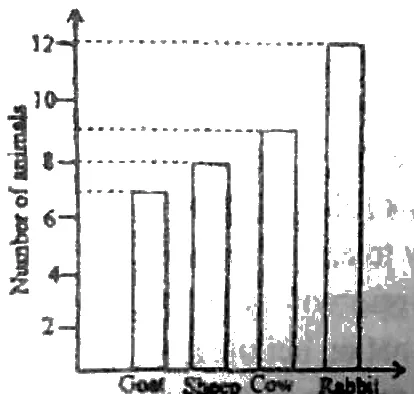
Use the graph below to answer questions 53 to 55. (Questions 113 to 115 in this sheet.)
What is the total number of animals in the farm?
- A. 50
- B. 44
- C. 36Correct
- D. 28
- E. 12
Explanation
The bars read: Goat 7, Sheep 8, Cow 9, Rabbit 12. Total = 7 + 8 + 9 + 12 = 36.
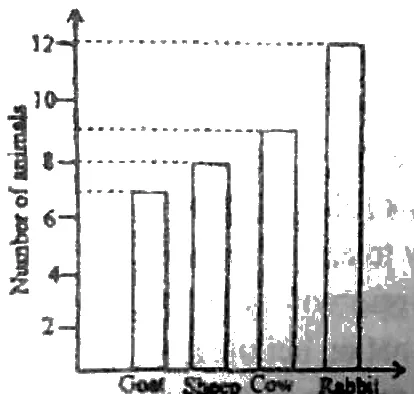
Which animal has the least number in the farm?
- A. Cow
- B. Sheep
- C. GoatCorrect
- D. Rabbit
- E. None
Explanation
The goat has the shortest bar (7).
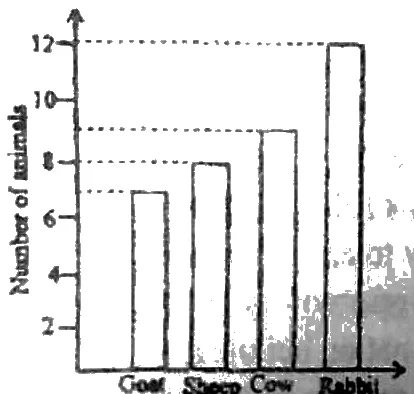
Find the average number of animals in the farm.
- A. 50
- B. 44
- C. 36
- D. 12
- E. 9Correct
Explanation
Average = 36 ÷ 4 = 9.
Find the range of the following set of numbers; 15, 17, 17, 8, 16, 2, 4, 3, 9, 2, 14.
- A. 15Correct
- B. 14
- C. 13
- D. 12
- E. 11
Explanation
Range = highest - lowest = 17 - 2 = 15.
What is the probability that an integer chosen at random between 1 and 10 inclusive is a prime?
- A. 1/2
- B. 1/3
- C. 1/5
- D. 2/5Correct
- E. 3/5
Explanation
The primes from 1 to 10 are 2, 3, 5 and 7 (4 numbers). Probability = 4/10 = 2/5.
Find the range of the following set of numbers; 0, 3, 3, 1, 0, 1, 2, 3, 4, 4, 5, 0.
- A. 0
- B. 1
- C. 2
- D. 4
- E. 5Correct
Explanation
Range = 5 - 0 = 5.
The table below shows the marks obtained by a set of students. Use the table to answer questions 59 and 60.
Marks: 2, 3, 4, 5, 6
Frequency: 3, 2, 5, 2, 3
What is the probability that a student picked at random scored 4 marks?
- A. 2/15
- B. 1/3Correct
- C. 2/5
- D. 1/2
- E. 3/4
Explanation
There are 3 + 2 + 5 + 2 + 3 = 15 students and 5 scored 4 marks. 5/15 = 1/3.
What is the probability that a student scored at least 5 marks?
- A. 1/2
- B. 1/3Correct
- C. 1/4
- D. 1/5
- E. 1/6
Explanation
"At least 5" means 5 or 6 marks: 2 + 3 = 5 students. 5/15 = 1/3.