All 50 questions from the West African Examinations Council (WAEC) Biology 2021 Objective paper, with the correct answer and a full explanation for each. Free, no signup needed.
Which of the following organelles is common to both plant and animal cells?
A. Cellulose cell wall
B. Chlorophyll
C. Cell membraneCorrect
D. Large vacuole
Explanation
Both plant and animal cells have a cell membrane. Cellulose cell wall, chlorophyll, and (typically) a large vacuole are found in plant cells, not animal cells.
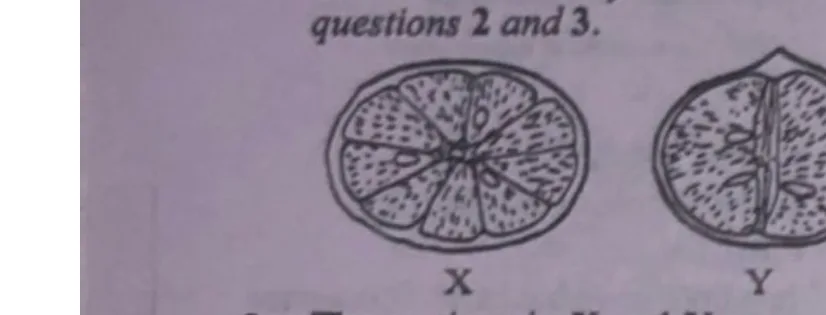
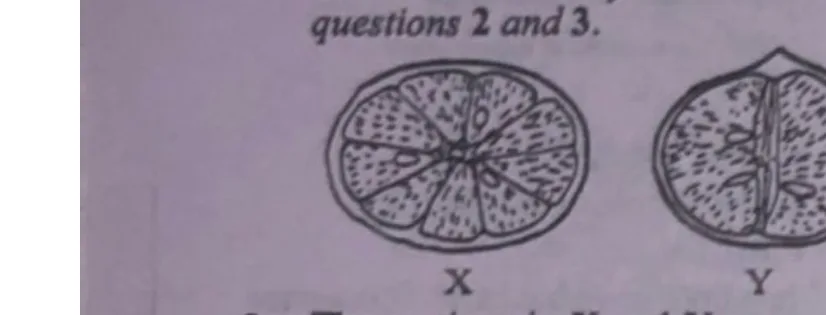
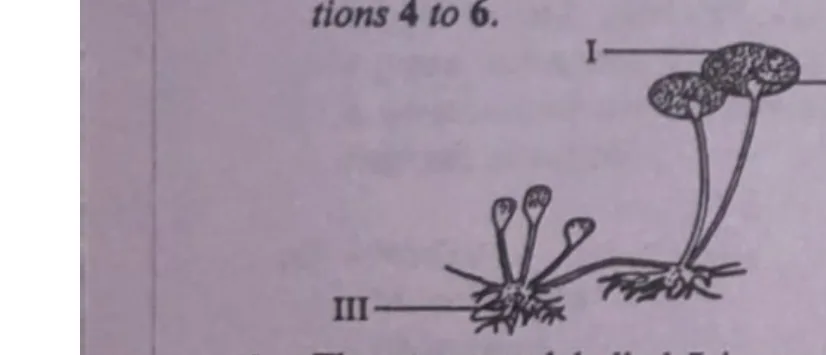
The diagrams below are illustrations of different sections of a particular fruit. Study them and answer questions 2 and 3. The sections in X and Y respectively are
A. longitudinal and transverse.
B. transverse and longitudinal.Correct
C. cross and transverse.
D. transverse and cross.
Explanation
X shows a transverse (cross-sectional) cut, while Y shows a longitudinal cut through the fruit.
A plant cell placed in a solution with a higher water potential will
A. expand and then shrink.
B. enlarge and become turgid.Correct
C. expand and then burst.
D. decrease in size and become flaccid.
Explanation
Water moves into the cell by osmosis (from higher to lower water potential outside-to-inside comparison), and the rigid cell wall prevents bursting, so the cell becomes turgid.
Offspring formed by sexual reproduction exhibit more variation than those formed by asexual reproduction because
A. greater amount of DNA is involved in sexual reproduction.
B. gametes of parents have different genetic composition.Correct
C. genetic materials come from parents of two different species.
D. sexual reproduction is a lengthy process.
Explanation
Since gametes from each parent carry different genetic material (due to independent assortment and crossing over), their combination produces varied offspring.
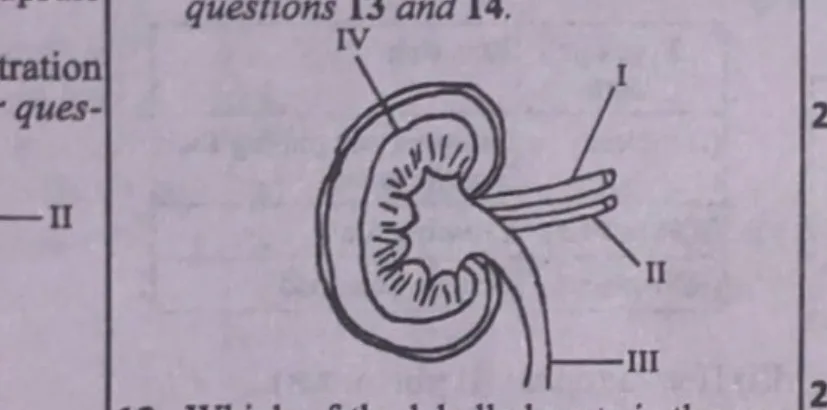
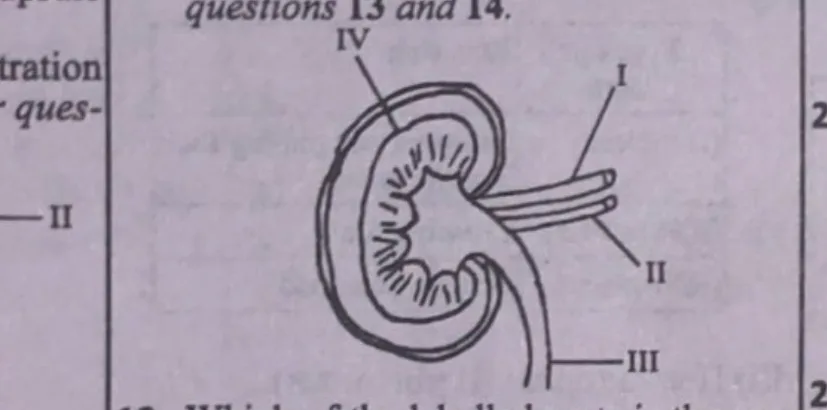
The diagram below is an illustration of the longitudinal section of a mammalian organ. Study it and answer questions 13 and 14. Which of the labelled parts is the cortex?
A. I
B. II
C. III
D. IVCorrect
Explanation
In the kidney diagram, I=renal artery, II=renal vein, III=ureter, and IV=the cortex (the outer region of the kidney).
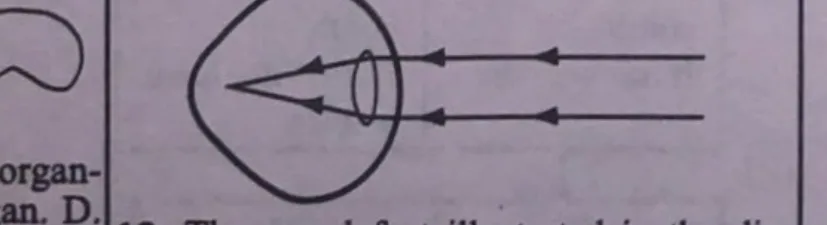
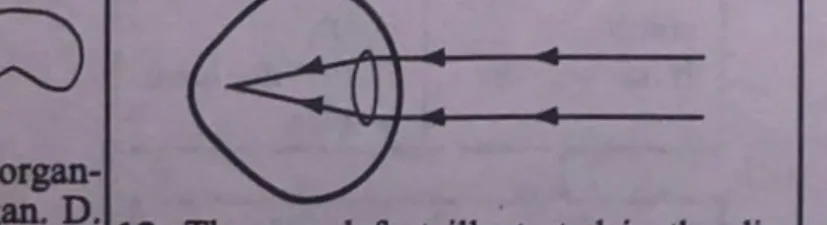
The diagram below is an illustration of a type of eye defect in humans. Study it and answer questions 18 and 19. The eye defect illustrated in the diagram is
A. hypermetropia.
B. astigmatism.
C. presbyopia.
D. myopia.Correct
Explanation
Since the light rays converge before reaching the retina, the diagram illustrates myopia (short-sightedness).
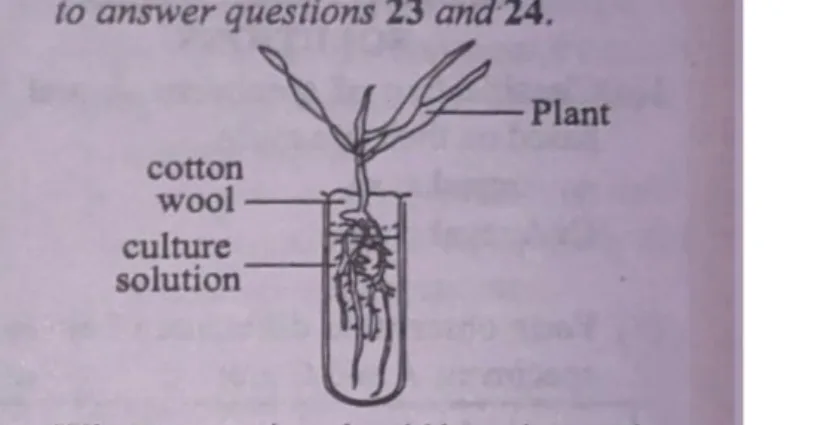
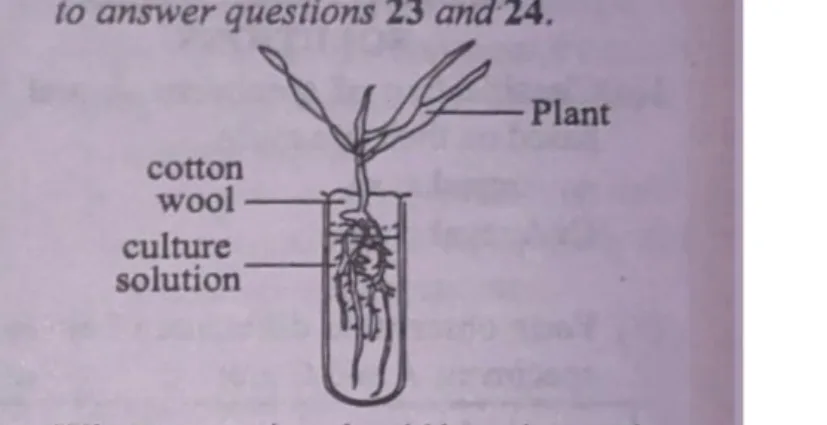
The diagram below is an illustration of the growth of a plant in a water culture. After a few days, the solution turned green and the plant died. Use it to answer questions 23 and 24. What precaution should have been taken to prevent the solution from turning green?
A. Use a non-green plant for the experiment
B. Aerate the solution daily
C. Cover the culture vessel with opaque paperCorrect
D. Keep cotton wool around the seedling to make it dry
Explanation
The green colour indicates algal growth, which needs light. Covering the vessel with opaque material blocks light and prevents algae from growing.
Autotrophic nutrition is a process whereby an organism obtains food
A. by utilizing its stored energy.
B. by synthesizing simple substances using energy.Correct
C. from other organisms in exchange for some products.
D. in a synthesized form, from other living organisms.
Explanation
Autotrophs make their own food by synthesizing simple substances (e.g. CO2 and water) using an energy source (light or chemical) — photosynthesis or chemosynthesis.
The process that takes place at the light stage of photosynthesis is
A. splitting of water molecules to form hydrogen ions.Correct
B. reduction of carbon (IV) oxide to form carbohydrate.
C. formation of two molecules of phosphoglyceric acid.
D. breaking down of ATP molecules to produce energy.
Explanation
The light stage (light-dependent reaction) splits water molecules (photolysis) to release hydrogen ions and oxygen; CO2 reduction happens in the dark stage.
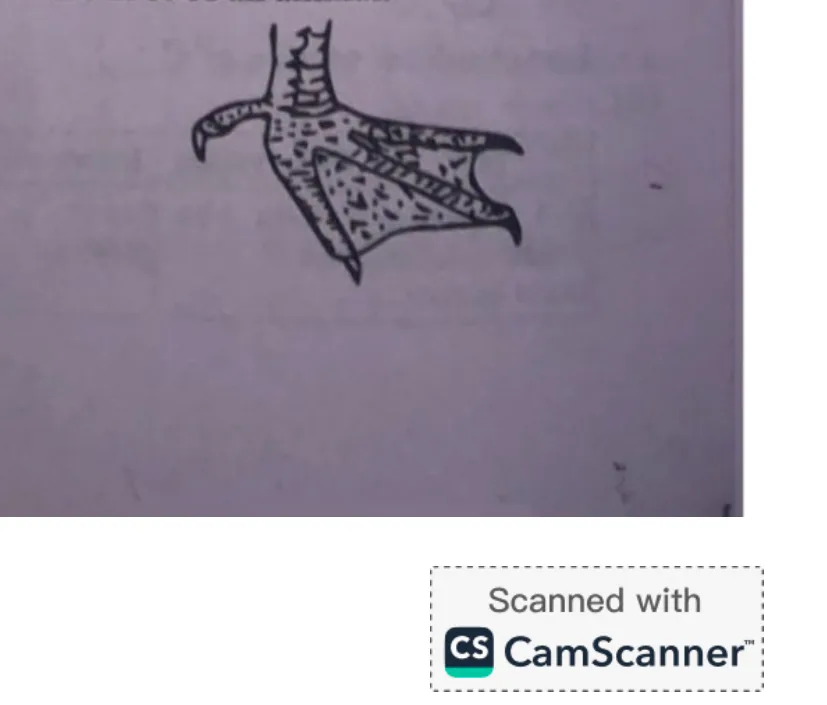
The illustration below is a food chain: Grass → grasshopper → domestic fowl → hawk. What would happen if the population of domestic fowl decreases? The
A. population of grasshoppers would decrease.
B. hawks would increase.
C. grasshoppers would increase.Correct
D. grasses available to grasshoppers would increase.
Explanation
With fewer domestic fowl (a predator of grasshoppers) preying on them, the grasshopper population would increase.
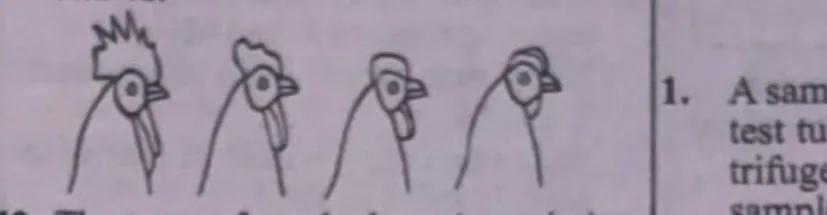
Which factor is most likely responsible for the various types of comb?
A. EnvironmentCorrect
B. Genetics
C. Physiology
D. Morphology
Explanation
An organism's observable traits (phenotype) are shaped by both genes and environment; per the given answer, environment is identified as the most likely factor here.
Which of the following statements about sickle cell anaemia is correct?
A. It is caused by sex-linked genes
B. It is more common in males than females
C. Two sickle cell carrier parents may have a sickling childCorrect
D. It is caused by recessive genes
Explanation
Sickle cell anaemia is not sex-linked; when both parents are carriers (heterozygous), there is a chance that a child inherits the sickle allele from both, resulting in a sickling (affected) child.
In humans, pointed eyebrows (B) is a dominant trait over smooth eyebrows (b). A student and the mother have smooth eyebrows while the father has pointed eyebrows. What is the genotype of the father?
A. BB
B. BbCorrect
C. bb
D. BBbb
Explanation
Since the child (student) has smooth eyebrows (bb), each parent must carry a recessive 'b' allele. Since the father shows pointed eyebrows (dominant), his genotype must be heterozygous, Bb.
A woman with Rhesus negative blood group was advised not to marry a man with Rhesus positive blood group because
A. it will hinder her from having blood transfusion from her husband.
B. it will result in sickness and probably death of the offspring.Correct
C. her children may all resemble her husband.
D. it may affect her childbearing ability.
Explanation
Rhesus incompatibility between an Rh-negative mother and Rh-positive father can cause the mother's immune system to attack the blood cells of an Rh-positive baby, risking serious illness or death of the offspring.
Which of the following statements is not Lamarck's postulate on evolution?
A. Great changes in the environment result in corresponding changes in species
B. Frequently used organs become well developed while the ones not used become vestigial
C. Well developed acquired characters are inheritable
D. Survivors in a competitive community must have inherited useful traitsCorrect
Explanation
The idea that survivors in a competitive community must have inherited useful traits reflects Darwin's theory of natural selection, not Lamarck's postulate of inheritance of acquired characteristics.
Advertisement
Sign up free to unlock
Score tracking
Practice history
Saved questions
Progress dashboard
Personalized sessions
Weak-topic breakdown
…and/or go further with premium services and No Ads.