WAEC Biology 2019 Theory — Question 4
Question 4 of 5 from the West African Examinations Council (WAEC) Biology 2019 Theory paper, with the correct answer and a full explanation.
Advertisement
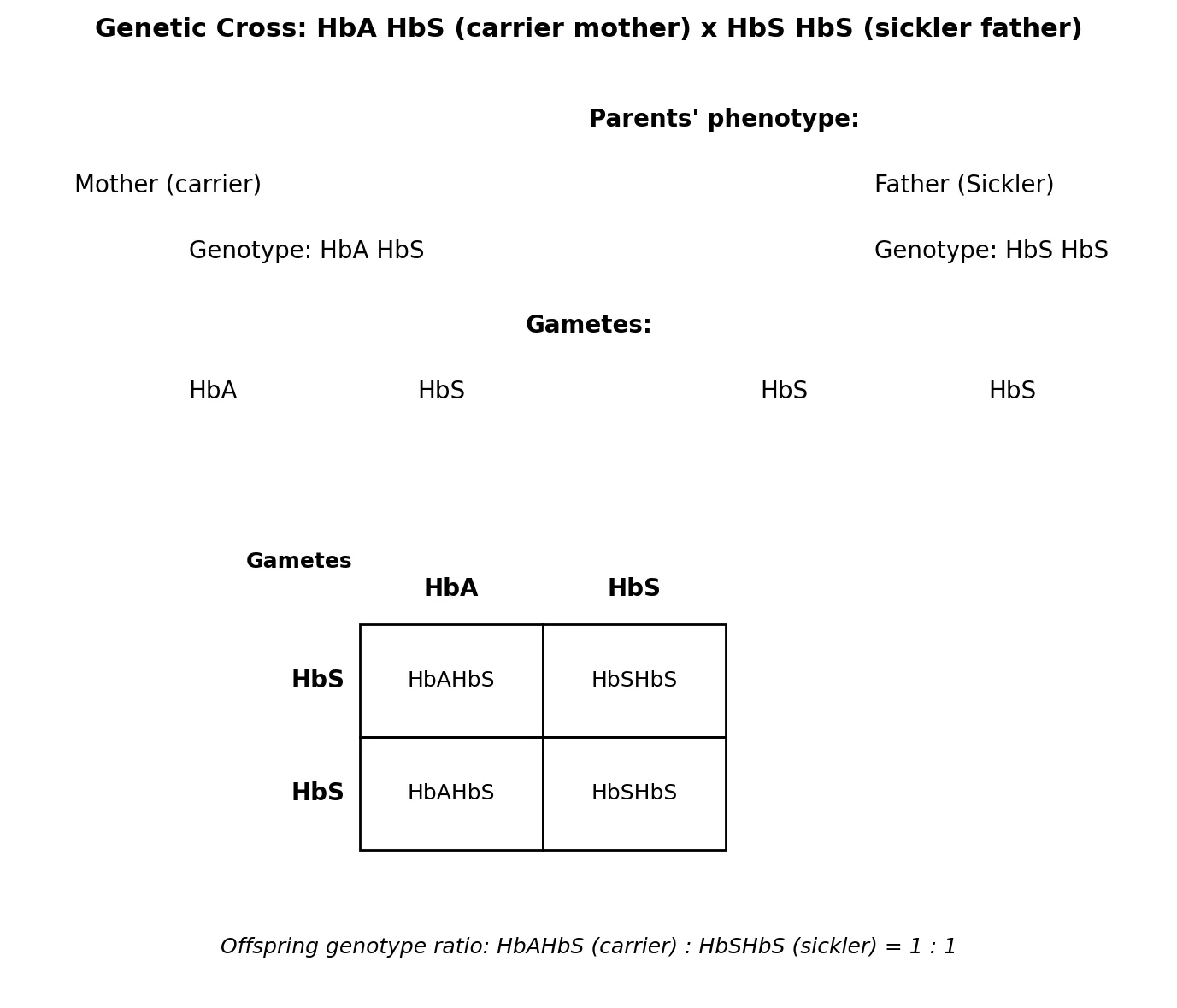
4(a) A female heterozygote for sickle cell married a Sickler. With the aid of a genetic diagram, determine the: (i) possible genotype of their offspring; (ii) phenotypic ratio of the offspring. (b) Explain briefly the reason why a Rhesus negative woman married to a Rhesus positive man might lose her second pregnancy. (c) Name two examples of features in animals that support the theory of use and disuse of body parts as used by Lamarck. (d) List three structures in mammals that are vestigial.
Model answer
(a) See the genetic cross diagram in the Diagram column, showing the cross between HbAHbS (carrier mother) and HbSHbS (sickler father). (i) Possible genotypes of the offspring: HbAHbS (carrier) and HbSHbS (Sickler). Since HbAHbS is a carrier while HbSHbS is a sickler, two out of the four offspring are carriers while the other two are Sicklers. (ii) Thus, the ratio of carriers to Sicklers = 1:1. (b) If the child inherits the rhesus factor from its father, the rhesus factor will enter the mother's blood stream. In response, the mother's system will develop the anti-rhesus antibodies. These antibodies will then enter the bloodstream of the foetus, leading to the destruction of the red blood cells of the foetus. This will weaken or kill the baby at birth. This occurrence may repeat itself in subsequent pregnancies. (c) Examples of features in animals that support the theory of use and disuse (Lamarckism): Long leg of herons; Long neck of giraffes. (d) Examples of vestigial organs in mammal: appendix, body hair and coccyx in man.
Advertisement
Sign up free to unlock
- Score tracking
- Practice history
- Saved questions
- Progress dashboard
- Personalized sessions
- Weak-topic breakdown
…and/or go further with premium services and No Ads.