WAEC Chemistry 2023 Theory — Question 3
Question 3 of 14 from the West African Examinations Council (WAEC) Chemistry 2023 Theory paper, with the correct answer and a full explanation.
Advertisement
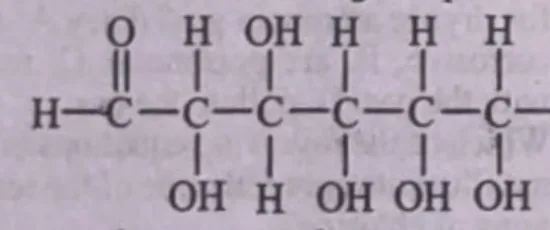
2. (a) In an experiment, 20.0 cm3 of a solution containing 4 g dm⁻³ of sodium hydroxide was neutralized by 8.0 cm3 of dilute tetraoxosulphate (VI) acid: (i) write a balanced equation for the reaction; (ii) calculate the concentration of the acid in mol dm⁻³. (b) (i) State two postulates of the Kinetic theory of gases which real gases do not obey. (ii) Explain briefly why real gases do not obey the postulates stated in 2(b)(i). (c) Consider the following organic compound: [Structural formula: O H OH H H / H–C–C–C–C–C–H / OH H OH OH H] (i) name the compound; (ii) name the two structural isomers of the compound; (iii) state the chemical process involved in the preparation of the compound from starch; (iv) write the chemical equation(s) for the steps involved in the process in 2(c)(iii); (v) name two enzymes involved in the process in 2(c)(iii). (d) Explain briefly the term structural isomerism.
Model answer
(a)(i) H2SO4 + 2NaOH → Na2SO4 + 2H2O (ii) Concentration of NaOH (CB) = conc. in g dm⁻³ ÷ Molar mass = 4/40 = 0.1 mol dm⁻³. Using CAVA/CBVB = nA/nB = 1/2: CA×8/(0.1×20) = 1/2, so CA = (0.1×20×1)/(2×8) = 0.125 mol dm⁻³. (b)(i) Real gases do not obey: (1) that the volume of gas molecules is negligible compared to the total volume of the container; (2) that there are no forces of attraction or repulsion between gas molecules (i.e. that collisions are perfectly elastic). (ii) The volume of a gas is not negligible because at high pressure the molecules occupy an appreciable volume, and at low temperature the intermolecular forces of attraction and repulsion become significant — so real gases deviate from ideal behaviour under these conditions. (c)(i) Glucose (ii) Fructose and Galactose (iii) Hydrolysis (starch hydrolysis is the breaking down of starch into smaller sugar molecules by water) (iv) 2(C6H10O5)n + nH2O —(diastase)→ nC12H22O11 (maltose); C12H22O11 + H2O —(maltase)→ 2C6H12O6 (glucose); [Further fermentation: C6H12O6 —(zymase)→ 2C2H5OH + 2CO2] (v) Diastase and maltase (zymase is also used if the process is extended to fermentation) (d) Structural isomerism is the existence of compounds having the same molecular formula but different structural formulae — i.e. a different arrangement/linkage of the atoms.
Advertisement
Sign up free to unlock
- Score tracking
- Practice history
- Saved questions
- Progress dashboard
- Personalized sessions
- Weak-topic breakdown
…and/or go further with premium services and No Ads.