All 120 questions from the Basic Education Certificate Examination (Junior WAEC) (BECE) Igbo Language 2024 Objective paper, with the correct answer and a full explanation for each. Free, no signup needed.
SECTION I: AGỤCHAAZAA
Iri ji so n'otu omenaala ndị Igbo. Ifa na-eme ya kwa afọ. Ọ bụkwa mmemme purụ iche. Obodo ọbụla dị n'ala Igbo nwere ọnwa nakwa mkpụrụ ụbọchị ole ha na-eme mmemme a. Akpugo na-eme mmemme a n'ọnwa Ọgọstụ. Nnewi na emekwa nke ha n'ọnwa Ọgọstụ. Nnobi na-eri ji ha n'ọnwa Septemba. Ugwuọba na-eri n'ọnwa Okutoba. Mgbe ochie a na-ewe iri ji ka ihe ndị ọgọmmụọ. Ugbu a, ọtụtụ mmadụ na-esonyezi mmemme a n'ihi na a chọpụtara na-onweghị ihe ife arụsị dị na ya.
Ọ bụ na mmemme a ka a na-ahụ udị ejije na abụ ọdịnaala dị iche. Ndị okenye na-eti mmọnwụ na-akọ ọgwụ, ụmụ nwaanyị na-agba egwu iji nwee obi anụrị. Ụmụokorobịa na-eti mmọnwụ na-apịa ụtali ebe ụmụagbọghọ na ụmụaka na-abụ ndị nkiri. A na-esi nri dị iche icheni mmemme a dịka osikapa, akịdị, abacha, ụgba, ụtara na ofe onugbu ma ọ bụ egwusi. Isi nri mmemme a bụ ji.
Kedu nke bụ isi nri na mmemme a?
A. AbachaB. AkịdịC. JiCorrect D. OsikapaE. Ụtara na ofe onugbuExplanation The passage ends: 'Isi nri mmemme a bụ ji.'
Mgbe ndị Akpugo na Nnewi ji eri ji ha bụ n'ọnwa
A. DisembaB. NovembaC. OkutobaD. ỌgọstụCorrect E. SeptembaExplanation Both Akpugo and Nnewi hold it in August (Ọgọstụ).
Ugwuọba na-eri ji n'ọnwa
A. DisembaB. NovembaC. OkutobaCorrect D. ỌgọstụE. SeptembaExplanation Ugwuọba eats the new yam in October (Okutoba).
Kedu obodo na-eri ji n'ọnwa Septemba?
A. IchidaB. NnewiC. NnobiCorrect D. ỌbaE. OkijaExplanation The town named for September is Nnobi.
Otu n'ime ndị a esoghị na nri a na-esi na mmemme a.
A. AbachaB. AkịdịC. EweduCorrect D. ỤgbaE. ỤtaraExplanation Ewedu is not among the foods listed.
Mgbe ochie, a na-ewe iri ji dịka ihe ndị
A. gụrụ akwụkwọB. nzukọC. ọgọmmụọCorrect D. ụkaE. ụmụakaExplanation In the past it was treated as a pagan (ọgọmmụọ) practice.
Ihe ndị mmadụ ji esonyezi na mmemme a bụ na a chọpụtara na-enweghị ihe
A. akwọkwọ dị na yaB. ife arụsị dị na yaCorrect C. iru ụlọ dị na yaD. isi nri dị na yaE. izụ ahịa dị na yaExplanation People join because it was found that there is no idol worship in it.
Kedu ihe ndị okenye na-eme na mmemme a? Ha na-
A. agba egwu n'ahịaB. agba ọsọ na-atụ egwuC. agụ akwụkwọ odide niileD. esi nri dị iche icheE. eti mmọnwụ na-akọ ọgwụCorrect Explanation The elders beat the mmọnwụ drum and recite medicine chants.
Gịnị ka ụmụagbọghọ na ụmụaka na-eme na mmemme a? Ha bụ ndị
A. agwaB. ahịaC. egwuD. nkiriCorrect E. okeExplanation The girls and children are the actors (ndị nkiri).
Otu n'ime ndị a bụ udị mmọnwụ ụmụokorobịa na-eti. Mmọnwụ na-
A. agba bọọlụB. akụzi akwụkwọC. apịa ụtaliCorrect D. eke egoE. eti egwuExplanation The youths beat the mmọnwụ while playing the ụtali.
SECTION II: MKPARỊTAỤKA
Oriakụ Ibe: Nne Chiọma, ị bịara ahịa?
Oriakụ Uche: Eeh! Nne Adakụ ị bọla chi?
Oriakụ Ibe: Eeh! Nwanne m kedu ka dị gị na ụmụaka dị?
Oriakụ Uche: Ha dị mma. Kedu maka ndị be gị?
Oriakụ Ibe: Ha dịcha mma. Abịara m n'ụlọ gị ụbọchị Satọdee, ị nọghị ya.
Oriakụ Uche: Eee, agara m ahịa izụta akwa ọcha.
Oriakụ Ibe: Gịnị mere nke mbụ?
Oriakụ Uche: Mmanụ nri metụrụ ya.
Oriakụ Ibe: Ego ole ka ị zụrụ nke ọhụrụ.
Oriakụ Uche: Azụrụ m ya otu puku naịra.
Oriakụ Ibe: Ọnụ ahịa ya dị mma. Biko kedu ihe Ụkọchukwu siri anyị wete ma anyị kpechaa ekpere?
Oriakụ Uche: Ọ siri anyị wete àkwá, unere, osikapa na ji.
Oriakụ Ibe: Ọ dị mma, m ga-agba mbọ nata dị m ego maka ihe ndị a.
Oriakụ Uche: Dị gị kwa. Gịnị mere ego nke gị?
Oriakụ Ibe: Nne, ị chefuola na dị m kwụsịrị m ọrụ.
Oriakụ Uche: Kwụsịrị gị ọrụ maka gịnị?
Oriakụ Ibe: Ọ siri n'ọrụ m bụ nnanị ilekọta ụmụaka anyị.
Oriakụ Ibe: Nne, ị chefuola na dị m kwụsịrị m ọrụ.
Oriakụ Uche: Kwụsịrị gị ọrụ maka gịnị?
Oriakụ Ibe: Ọ siri n'ọrụ m bụ naanị ilekọta ụmụaka anyị.
Oriakụ Uche: Ọ dị mma. Ọrụ m abụghị naanị ilekọta ụmụ anyị.
Oriakụ Ibe: Nne Chiọma, ị bụ nnukwu mmadụ, mụ na gị ahaghị.
Oriakụ Uche: Ee, m na-elekọ ha, ana m arụ ọrụ iji nweta ego akpa nke m.
Oriakụ Ibe: Nne, ihe ị kwuru bụ ezigbo. M ga-eleba anya n'okwu a. Ka ọ dị.
Oriakụ Uche: Nwanne m, ka ọ dị.
Aha nwa Oriakụ Ibe bụ
A. AdakụCorrect B. ChiọmaC. IbeD. OriakụE. UcheExplanation Oriakụ Uche greets her 'Nne Adakụ'.
Ebe ha nọ kparịa ụka a bụ n'______.
A. ahịaCorrect B. ụgbọalaC. ụlọ Oriakụ IbeD. ụlọ Oriakụ UcheE. ụlọụkaExplanation Oriakụ Ibe asks 'ị bịara ahịa?' - they meet at the market.
Kedu ụbọchị Oriakụ Ibe gara n'ụlọ Oriakụ Uche? Ụbọchị
A. EkeB. MọndeC. OrieD. SatọdeeCorrect E. ỤkaExplanation She says she came on Saturday.
Aha nwa Oriakụ Uche bụ ______.
A. AdakụB. ChiọmaCorrect C. IbeD. OriakụE. UcheExplanation Oriakụ Ibe calls her 'Nne Chiọma'.
Onye ka dị ya kwụsịrị ọrụ? Oriakụ
A. AdakụB. ChiọmaC. IbeCorrect D. NnanyereE. UcheExplanation Oriakụ Ibe says her husband stopped her from working.
Ego ole ka Oriakụ Uche zụrụ akwa ọcha ahụ?
A. Naịra iriB. Naịra iri iseC. Nari naịra abụọD. Nari naịra abụọ na iseE. Otu puku naịraCorrect Explanation She bought it for 'otu puku naịra' (1,000 naira).
Gịnị mere akwa ọcha nke mbụ ọ zụtara?
A. Mmanụ isi metụrụ ya.B. Mmanụ nri metụrụ ya.Correct C. Mmiri akị wụrụ ya.D. Mmiri wụrụ ya.E. Ngụ wụrụ ya.Explanation Cooking oil (mmanụ nri) touched it.
Nke esoghị n'ihe Ụkọchukwu siri ha wete bụ
A. akaraCorrect B. àkwáC. jiD. osikapaE. unereExplanation He asked for àkwá, unere, osikapa and ji.
Onye bụ nnukwu mmadụ bụ Oriakụ ______.
A. AdakụB. ChiọmaC. IbeD. NnanyereE. UcheCorrect Explanation Oriakụ Ibe tells Oriakụ Uche 'ị bụ nnukwu mmadụ'.
Mkparịtaụka a dị n'etiti mmadụ ______.
A. abụọCorrect B. anọC. atọD. iseE. isiiExplanation Only two women speak.
Nke bụ iri anọ na isii na ndị a bụ
A. 26B. 40C. 44D. 46Correct E. 64Explanation Iri anọ (40) + isii (6) = 46.
Kedu nke putara 40 n'Igbo?
A. Iri anọCorrect B. Iri anọ na anọC. Iri na anọD. Nari anọE. Puku anọWrite 300 n'Igbo.
A. Iri atọB. Iri na atọC. Nari atọCorrect D. Nde atọE. Puku atọExplanation Nari = 100, so 300 = nari atọ.
How do you greet somebody that is ill?
A. Ị lọtalaB. Ị pụtalaC. Ka chi fooD. NdoCorrect E. NnọọExplanation 'Ndo' is the sympathy greeting.
Ekele e ji anabata ọbịa n'ala Igbo bụ
A. jee nke ọmaB. jisie ikeC. ka e mesịaD. ndoE. nnọọCorrect Explanation 'Nnọọ' welcomes a visitor.
Gịnị ka a na-ekele n'ụtụtụ?
A. Ehihie ọmaB. Ị lọlaC. Ka chi bọọCorrect D. Mgbede ọmaE. Ụtụtụ ọmaExplanation 'Ka chi bọọ' is the morning greeting.
Kedu abịịchịị na-eso 'm'?
A. FB. GC. KD. LE. NCorrect Explanation The order runs ... l, m, n.
Mkpụrụedemede ole dị n'okwu a bụ udaume?
A. AbụọB. AnọC. AtọD. IsiiCorrect E. OtuExplanation u-d-a-u-m-e has six letters (isii).
Họpụta nke bụ sọ myiriudaume ebe a.
A. F, GB. K, WC. M, NCorrect D. N, DE. N, RExplanation M and N are both nasal sounds.
Olee ihe "pronoun" putara n'asụsụ Igbo?
A. AhaB. MbuụzọC. NgwaaD. NjikọE. NnọchiahaCorrect Explanation Pronoun = nnọchiaha.
Nke abụghị okwu ajụjụ ebe a bụ
A. ebeeB. gịnịC. keduD. ocheCorrect E. oleeExplanation 'Oche' (chair) is a noun, not a question word.
That goat is very big.
A. Ewu a bụ ewu buru ibu.B. Ewu a mara mma n'ahụ.C. Ewu ahụ buru ibu nke ukwuu.Correct D. Ewu ahụ buru ibu.E. Ewu ahụ mara mma n'ahụ.Explanation 'Nke ukwuu' = very.
I am short.
A. Adị m mkpụmkpụ.Correct B. Anyị dị mkpụmkpụ.C. Ha dị mkpụmkpụ.D. Ọ dị mkpụmkpụ.E. Ụnụ dị mkpụmkpụ.Explanation 'Adị m' = I am.
He bought a new car.
A. Anyị zụtara ụgbọala ọcha.B. Anyị zụtara ụgbọala ọhụụ.C. Ha zụtara ụgbọala ọhụụ.D. Ọ zụtara ụgbọala ọhụụ mara mma.E. Ọ zụtara ụgbọala ọhụụ.Correct Explanation 'Ọ' = he/she, 'ọhụụ' = new.
Live and let live.
A. Bịa biri.B. Bịanụ biri.C. Biri ka m biri.Correct D. Ha ga-ebi.E. Ụnụ biri.Explanation 'Biri ka m biri' = live and let me live.
Enwere m uwe ojii.
Nkejiasụsụ okwu a kara ihe n'okpuru bụ (m)
A. ahaB. mbuụzọC. ngwaaD. nkọwaahaE. nnọchiahaCorrect Explanation 'M' (I) is a pronoun.
Kedu nke bụ akara ajụjụ ebe a?
A. !B. .C. :D. ?Correct E. ( )Explanation The question mark is '?'.
Akara edemede na-egosi n'ahịrịokwu abịala n'isi njedebe bụ
A. akara mkpuB. akara uhieC. kpọmCorrect D. kpọm rịkọmE. rịkọmExplanation The full stop (kpọm) marks the end.
Okeke na Ugomma na-esi nri. Okwu a kara ihe n'okpuru (na) bụ ______.
A. ahaB. mgbakwunyeC. ngwaaD. njikọCorrect E. nnọchiahaExplanation 'Na' (and) joins two names: a conjunction.
What is the name of snake in Igbo?
A. AgwọCorrect B. AturụC. EjuleD. MbeE. OkeHọpụta nke abụghị nri ndị Igbo.
A. AbachaB. AkpụC. AmalaCorrect D. JiE. ỤkwaExplanation Amala is a Yoruba food.
Ụbọchị ole dị n'izu Igbo?
A. AbụọB. AnọCorrect C. AtọD. IseE. IsiiExplanation The Igbo week has four days.
Otu n'ime ndị a esoghị n'ihe ndị Igbo ji anabata ọbịa.
A. AkwụkwọCorrect B. AñaraC. MmimiD. NzuE. ỌjịExplanation Kola, wine, palm wine and chalk are used to welcome a guest, not a book.
Ekike ndị Igbo na ndị a bụ ______.
A. agbadaCorrect B. bubaC. obiọgọdọ abụọD. ọla imiE. ọla ọnụExplanation Agbada is a traditional attire.
Nke bụ jenda nnekwu bụ ______.
A. agụB. aturụC. ewuD. mkpiE. okeọkpaCorrect Explanation The male counterpart of the hen (nnekwu) is the cock (okeọkpa).
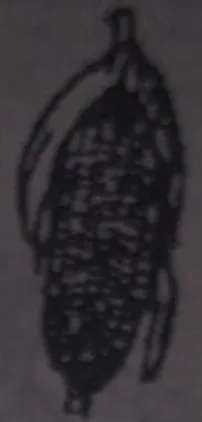
Gịnị ka a na-akpọ eserees a?
A. AkịdịB. AkpụC. EdeD. ỌkaCorrect E. OseExplanation The picture shows a maize cob (ọka).
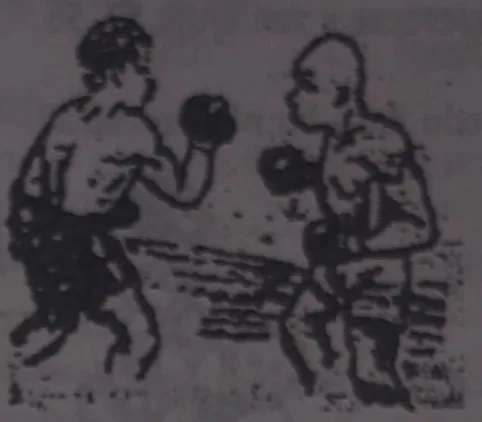
Gịnị ka Nduka na Chidị na-eme n'eserees a? Ha na-______.
A. agba bọọlụB. aku ọkpọCorrect C. egwu egwuD. eri nriE. ese iheExplanation The picture shows two men boxing.
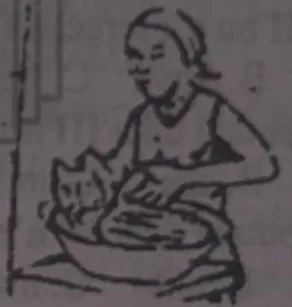
Gịnị ka Nnenna na-eme n'eserees a? Nnenna na-______.
A. agụ akwụkwọB. akọ iheC. asa akwaCorrect D. eje ahịaE. esi nriExplanation She is washing clothes in a basin.
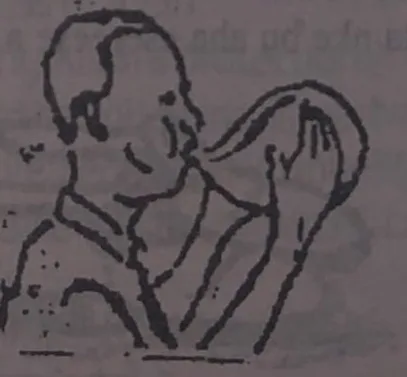
Olee ihe Uche na-eme ebe a? Uche na-______.
A. afụ bolomboloCorrect B. agba bọọlụC. agba egwuD. agba ọsọE. ebe akwaExplanation The man is blowing into something (afụ bolombolo).
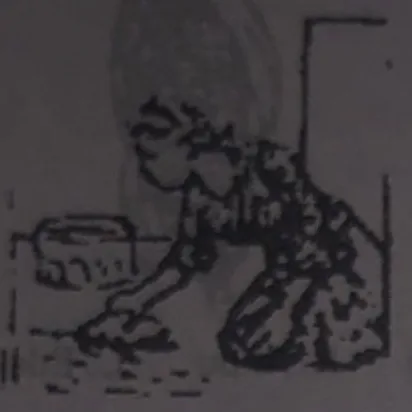
Kedu ihe Adakụ na-eme n'eserees a? Adakụ na-______.
A. asa efereB. aza ụlọC. ehicha ụlọCorrect D. eje ahịaE. esi nriExplanation She is kneeling and wiping the floor.
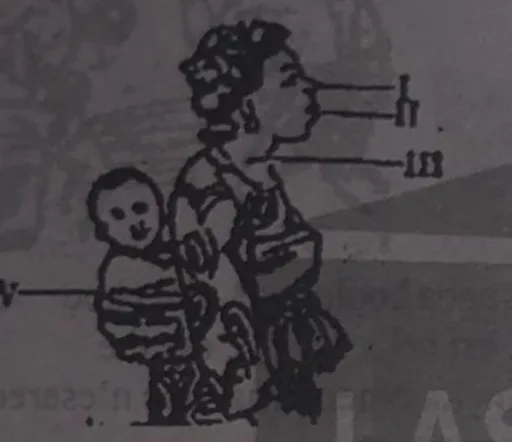
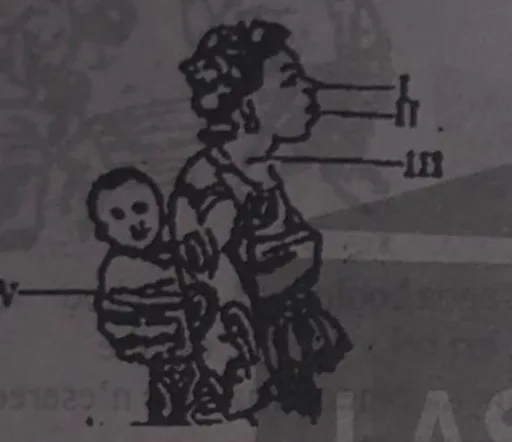
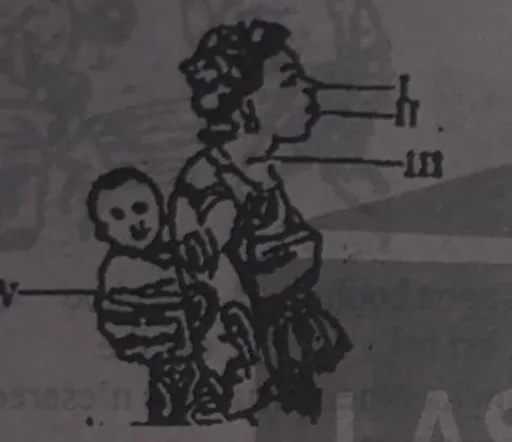
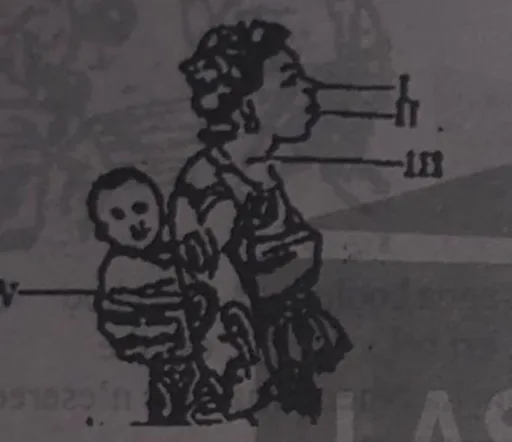
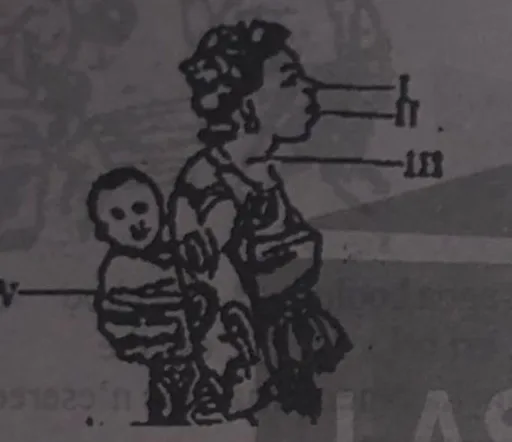
Kedu ihe I bụ n'eserees a?
A. AnyaB. EzeC. ImiCorrect D. IsiE. ỤkwụExplanation Line I points to the nose (imi).
Gịnị ka II bụ n'eserees a?
A. AkaB. AnyaC. ImiD. OluE. ỌnụCorrect Explanation Line II points to the mouth (ọnụ).
Ebe a zipụtara dịka III n'eserees a bụ
A. akaB. azụC. imiD. isiE. oluCorrect Explanation Line III points to the neck (olu).
Ebe e zipụtara dịka IV n'eserees a bụ
A. nnaB. nneC. nwaCorrect D. nwanneE. ụmụExplanation Line IV points to the baby (nwa).
Gịnị ka nwaanyị a na-eme n'eserees a?
A. ku nwa n'aka.B. kwọ nwa n'azụ.Correct C. na-aga ụlọọgwụ.D. na-asa nwa ahụ.E. na-ebe akwa.Explanation She is carrying a baby on her back.
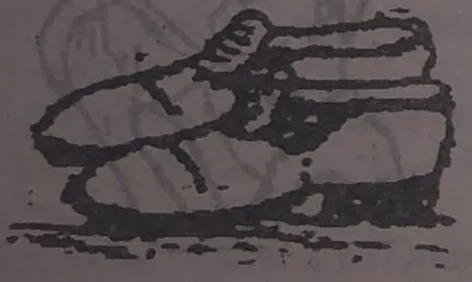
Họpụta nke bụ aha eserees a.
A. AkpụkpọụkwụCorrect B. EfereC. IkoD. IteE. OcheExplanation The picture shows a pair of shoes (akpụkpọụkwụ).
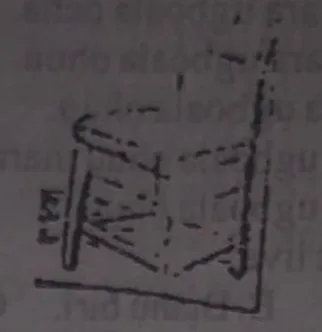
Kedu aha eserees a?
A. EwuB. IkoC. NjụọyịD. OcheCorrect E. OsisiExplanation The picture shows a chair (oche).
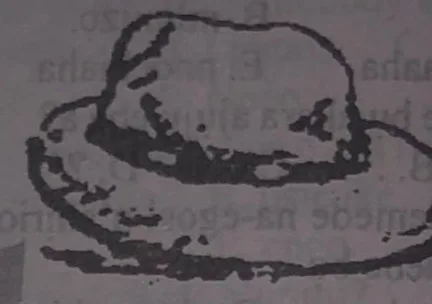
Aha eserees a bụ ______.
A. akịB. mmadụC. ocheD. okpuCorrect E. ọkụkọExplanation The picture shows a hat (okpu).
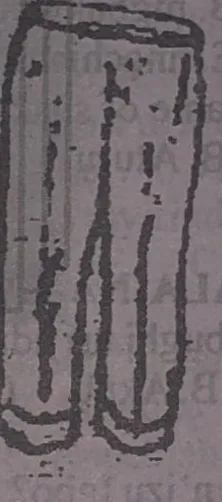
Kedu aha eserees a?
A. Igwe ahụB. Iko nriC. Ji na akpụD. Uwe imeE. Uwe ụkwụCorrect Explanation The picture shows trousers (uwe ụkwụ).
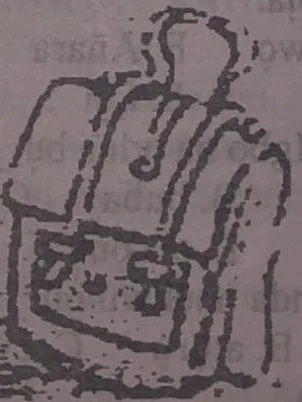
Eserees a bụ ______.
A. akpaCorrect B. akwaC. edeD. igbeE. ọkaExplanation The picture shows a school bag (akpa).
Aguụ nyụrụ ndị mmadụ ikpakwụ n'oge ọria COVID-19. Atụmatụokwu putara ihe n'ahịrịokwu a bụ
A. akpaalaokwuB. mbụrụC. mmemmadụCorrect D. myiriE. nsinụụdaExplanation Hunger is made to act like a person (chasing people): personification (mmemmadụ).
Odenigbo bụ nna ya n'ihe niile.
Olee atụmatụokwu putara ihe n'ahịrịokwu a?
A. EgbeokwuB. IgbuduokwuC. MbụrụCorrect D. MmemmadụE. MyiriExplanation 'Odenigbo is his father' says one thing is another: metaphor (mbụrụ).
Ọlaedo metụrụ mma aka ka nne ya ochie. Ahịrị a bụ
A. mbụrụB. mmemmadụC. myiriCorrect D. nkwusaraE. nsinụụdaExplanation The 'ka' comparison makes it a simile (myiri).
Nwa ọhụrụ Adaku ahụ bụ ugo.
Ahịrịokwu a putara na nwa ọhụrụ Adaku ahụ
A. bụ nwa ugoB. mara mma nke ukwuuCorrect C. na-efe efe ka ugoD. na-eji ka ugoE. na-eme ka ugoExplanation Calling the baby 'ugo' (eagle, a symbol of beauty) means she is very beautiful.
Anaghị eji abalị arọ anya.
Atụmatụokwu putara ihe ebe a bụ
A. igbuduokwuB. iluCorrect C. mbụrụD. myiriE. nsinụụdaExplanation It is a proverb (ilu).
Kpụ kpụ mkpụ ogele
ọ ogele ọ gelele
kpụ kpụ mkpụ ogele
ọ ogele ọ gelele
onye na-akpụ ogele?
ọ ogele ọ gelele
Abụ a bụ abụ
A. aghaB. akwamozuC. ọgwụ ọnwaD. ngụgụ nwaCorrect E. otutoExplanation The repeated soothing refrain suggests a lullaby (ngụgụ nwa).
Nwunye ya arịtụọla.
Olee atụmatụokwu putara ihe ebe a?
A. AkpaalaokwuCorrect B. EgbeokwuC. IgbuduokwuD. MbụrụE. MyiriExplanation It is an idiomatic phrase (akpaalaokwu).
Otu na ndị a esoghị na myiri.
A. Amarachi dị ka nne ya n'ihe niile.B. Chukwusom bụ nna ya ochie.Correct C. Ogechi dị ka dị ya.D. Ọluchi yiri nne ya nke ukwuu.E. Udochukwu dị ka nna ya.Explanation B has no 'ka/yiri' comparison word: it is a metaphor.
Kedu nke abụghị ilu na ndị a?
A. A naghị ata ọkpụkpụ nshikọ na nzuzo.B. Egbe tiri nwa na-ebe akwa.Correct C. Ogbenye adịghị arọ nrọ osikapa.D. Ọ bụ ihe onye nwere na-epu n'ubi ya.E. Ọ bụ ọma nkịta na-amagye ya aka n'ọnụ.Explanation B reads as a plain statement, not a proverb.
Ndị a niile bụcha akpaalaokwu ma e wepụ
A. anyị tara ọjị aka.B. ha bịara taa.Correct C. Ikenna bụ agụ.D. ọ tara isi mbe.E. ụbụrụ ya na-agho nkọ.Explanation 'Ha bịara taa' is literal (they came today); the others are idioms/figures.
Họpụta nke bụ okwuntabiire n'ahịrịokwu ndị a.
A. Chidi bụ enyi.B. Ebenebe gburu ebenebe n'ukwu ebenebe dị n'ebenebe.Correct C. Gwa m ihe mere eze jiri rachaa ntụ?D. Okpomọkụ egbuola mmadụ.E. Ọ nwere ụbụrụ eke.Explanation B is a tongue-twister (okwuntabiire).
Họpụta nke abụghị mmemmadụ na ndị a.
A. Agwa ọjọọ ewerela ọnọdụ n'ala anyị.B. Ahụhụ akpụọla ya isi.C. Añụrị na-egbu ya ka mmanya.D. Asịrị na-ejere ndị ahụ ozi.E. Erimma bụ okoso.Correct Explanation E is a metaphor; the others give human acts to things.
Gwa m gwa m gwa m ihe kuru mmiri rịa elu?
A. AkịB. Akị BekeeCorrect C. MangoroD. UbeE. ỤdaraExplanation Riddle answer: coconut (akị Bekee) carries water high up.
Gwa m gwa m gwa m ọtị nwata n'ihu nne ya?
A. AguụCorrect B. AkwaC. MkpaD. NriE. ỤkpakaExplanation Riddle answer: hunger (aguụ).
Gwa m gwa m gwa m ihe mere eze jiri rachaa ntụ?
A. AkịCorrect B. MangoroC. OromaD. UbeE. ỤdaraExplanation Riddle answer: akị (nut).
Họpụta nke esoghị n'ihe e jiri mara Ihemere.
A. Isonye n'otu nzuzoB. Izu ohiC. Ikpa agwa ọmaCorrect D. Ikwaso nwaanyị iko n'ikeE. Iṭọrọ mmadụExplanation Ihemere is known for crime, not for good behaviour.
Aha dibịa ahụ nyere Unenka ọgwụ e ji atụta ime bụ
A. EbieB. EnyenefuCorrect C. IkpedịD. ObikaE. UmeyoExplanation From the text (best recollection).
Onyeisi agwa n'akwụkwọ a bụ
A. EbieB. IhemereCorrect C. IkpedịD. ObikaE. UmeyoExplanation Ihemere is the main character of Eze Oche Abaghị.
Gịnị ka Chinweikpe na-eme n'ime ọhịa mgbe Ihemere na enyi ya nwoke jidere ya kụọ ya ihe tinka kụrụ paanụ? Ọ na-
A. akọ iheB. akpa nkụCorrect C. arụchasị ahịhịaD. ewe iheubiE. ezuikeExplanation Best recollection: she was gathering firewood.
Nwoke e ji idozi ugbọala wee mara n'obodo Obika ha bụ
A. EbieCorrect B. DogoC. IkpedịD. OnyenefuE. UmeyoExplanation Best recollection.
Ebee ka nọọsụ tụfuru ọgwụ ahụ gburu Urunwa? N'
A. akụkụ akwa yaB. ikpo ahịhịaC. ọhịaCorrect D. ụlọ haE. ụzọExplanation Best recollection.
Ndị niile a bụcha ụmụ Amaechi ma e wepụ
A. AdaọraB. IfụnaanyaC. NnedịD. NwaabịaCorrect E. ỌlụchukwuExplanation Best recollection.
Enyi mere enyi ya n'akwụkwọ a bụ
A. AdaọraB. AmaechiC. NnedịCorrect D. ỌlụchukwuE. ỤwaezuokeExplanation Best recollection.
Ebe Urunwa nọrọ nwụọ bụ n'ụlọ
A. akụB. akwụkwọC. oriri na nkwariD. ụlọakwụkwọE. ọgwụCorrect Explanation She died in hospital (ụlọọgwụ).
Urunwa na nwa ya nọrọ abalị ______ tupu ọ nwụọ.
A. abụọB. anọCorrect C. atọD. iseE. isiiExplanation Best recollection.
Nwaanyị na-ere utaba n'akwụkwọ a bụ
A. AzụanụkaB. IbekweC. GbazuongaD. NneteCorrect E. NwaobiaraExplanation Best recollection.
Ọ jụ ugo Maazị Azụanụka wara gbara ibe ______
A. anọB. asaaCorrect C. atọD. iseE. isiiExplanation Best recollection.
Họpụta onye chiri echichi ozo n'akwụkwọ ejije a.
A. AzụanụkaCorrect B. IbekweC. NwaokorikwoD. OnyekwereE. ỌnọnenyịExplanation Best recollection.
Utara a boro abọ,
Maka nnu banyere ya
Mgbe m na-asụ ya n'anyasị
Onye kwuru okwu a?
A. AzụanụkaB. IbekweC. NneteCorrect D. NwangangaE. OnyịrịụkaExplanation Best recollection.
Kedu onye a na-etu erigbuo onye nganga akpọ ya onye ọma n'akwụkwọ a? Maazị
A. AzụanụkaCorrect B. IbekweC. GbazuongaD. OnyekwereE. OnyịrịụkaExplanation Best recollection.
Nne na nna Ekweekwe n'akwụkwọ ejije a bụ
A. Akọbuche na ChinweB. Chinaagọrọm na ObiC. Didịụkọ na EkwendụCorrect D. Obi na NwakaegoE. Ọbụmneeke na ObinwanneExplanation Best recollection.
Ụmụ ole ka Didịụkọ mụtaara dị ya? Ụmụ
A. abụọB. anọCorrect C. atọD. iseE. isiiExplanation Best recollection.
Naanị ihe ga-azọ gị n'ụlọ a
Bụ ma ị kwaara ngwongwo gị
Kpọrọ ụmụ ọkụkọ ị na-amụ
Laa be nna gị
Onye ka a gwara okwu ndị a?
A. AdaakụB. ChinweC. DidịụkọCorrect D. NwakaegoE. ỌbụmneekeExplanation Best recollection.
Ndị a niile bụcha ụmụ Ọbụmneeke ma e wepụ
A. AdaakụCorrect B. ChinenyenwaC. ChisomD. NnekaE. NnẹọmaExplanation Best recollection.
Enyi nwaanyị Ọbụmneeke nke ya na dị ya bụ
A. AdaakụCorrect B. ChinaagọrọmC. ChisomD. NgoziE. NwamakaExplanation Best recollection.
N'abụ "Osisi Nkwu", họpụta obodo akpọghị aha n'ime osisi nkwu.
A. AbaB. MbanoCorrect C. MbaiseD. ỌhaE. OwerriExplanation Best recollection.
Ibu nmanụ e ji eri ọfe.
N'abụ "Osisi Nkwu" olee atụmatụokwu ahịrị a bụ?
A. AkpaalaokwuB. EgbeokwuC. IluCorrect D. MbụrụE. MyiriExplanation Best recollection.
N'abụ "Udo Ka Mma", họpụta nke bụ udo dịka edeabụ siri kwuo.
A. AnyaukwuB. AsịrịC. ỊhụnaanyaCorrect D. IwerọkaE. MkpọromasịExplanation Best recollection.
Onye ndụ bedimasta
Mkpanaka principalis
Enyi ndị nkụzi
Olee abụ nwe ahịrị ndị a?
A. Ada IgboB. AmamiheC. MatimatisiD. Onye nkụzi mCorrect E. UtaliExplanation The lines are about a teacher/principal: 'Onye nkụzi m'.
N'abụ "Ahịa Obodo M", obodo akpọghị aha ebe a bụ
A. AmaigboCorrect B. Eziama ObaireC. IsuD. NkwerreE. NkwọjịExplanation Best recollection.
N'ala Igbo, nna nwaanyị mụrụ nwa anaghị
A. arụ ụlọB. asa ahụ yaCorrect C. eje ahịaD. ele omugwọE. eri nriExplanation Custom: the husband does not bathe the new mother.
Otu na ndị a esoghị na anụ a maara na-ebi n'ụlọ.
A. AgụCorrect B. EwuC. NkịtaD. NwambaE. ỌkụkọExplanation Agụ (leopard) is a wild animal.
Onye anaghị awa ọjị n'ikwunne ya maọbụ ebe ọbụla nna ya ochie nọ bụ
A. nwaadaCorrect B. nwadialaC. nwokeD. ụmụnnaE. ụmụnneExplanation Custom: a daughter does not break the kola.
Otu na ndị a so na nkwenye ndị Igbo.
A. Ichu mmiriB. Isi nriC. Ichị chiD. Ịkọ ayọbasịE. Ịlọ uwaCorrect Explanation Reincarnation (ịlọ uwa) is an Igbo belief.
Ekele onye na-eme njem bụ
A. gaa nke ọmaCorrect B. ị meelaC. jisie ikeD. nnọọE. nọdụ mmaExplanation 'Gaa nke ọma' = go well, said to a traveller.
Akaọrụ ndị Igbo gụnyere ndị a ma e wepụ
A. ite nkwụCorrect B. ịchụC. ịkọ ugboD. ịkpụ ụzụE. ịkụ azụExplanation 'Ite nkwụ' is not an occupation; hunting, farming, crafts and fishing are.
Omenaala Igbo agaghị ezu oke ma a gụnyeghị
A. iku nwaB. iri nriC. iga ụkaD. isa ahụE. iwa ọjịCorrect Explanation Kola-nut breaking (iwa ọjị) is central to Igbo custom.
Nke esoghị n'uru ọjị bara bụ e ji ọjị
A. akwọ ụgbọalaCorrect B. anabata ọbịaC. edozi esemokwuD. egosi ịhụnanyaE. ejikọ obi ọnụExplanation Kola is not used for driving a vehicle.
Ọjị gbara ibe ise na-egosi
A. agamniihuB. izụ ahịaC. mbuli n'ọkwaD. ọmụmụ na ụbaCorrect E. udoExplanation A five-lobed kola signifies fertility and prosperity.
Ezinaụlọ e nwere nna, nne, ụmụaka ha na ikwunaibe ha ka a na-akpọ ezinaụlọ
A. mbisaB. mkpukeC. ntaD. ukwuCorrect E. ụbaraExplanation A family with parents, children and relatives is the extended family (ezinaụlọ ukwu).
Onye ka ọ dịịrị igozi ndị na-alụ dị na nwunye n'ala Igbo?
A. Ndị enyi haB. Ndị nkụzi haC. Nne na nna haCorrect D. Ụmụnna haE. Ụmụnne haExplanation Parents guide and bless a couple at marriage.
N'ala Igbo, nnọọ bụ ekele a na-ekele onye
A. lọtara njemCorrect B. na-arịa ọrịaC. na-arụ ọrụD. na-egwu egwuE. na-eri nriExplanation 'Nnọọ' welcomes someone who has returned from a journey.
Ọjị gbara otu ibe ka a na-akpọ ọjị
A. ahịa anọ ndị IgboB. dikeC. nzeD. ogbiCorrect E. ọmụmụExplanation Kola with one lobe is called ogbi.
Nwaanyị dị ya nwụrụ n'ala Igbo na-
A. agba mkpeB. echi lọọlọCorrect C. eke ekpeD. ele ọmụgwọE. eru mgbedeExplanation A widow observes mourning rites.
Ụbọchị ikpeazụ n'izu Igbo bụ
A. afọB. ekeC. nkwọCorrect D. orieE. ọnwaExplanation The Igbo week runs Eke, Orie, Afọ, Nkwọ; Nkwọ is last.
Aha ọzọ a na-akpọ ụmụọkpụ bụ
A. ụmụadaB. ụmụakaC. ụmụezeD. ụmụnnaCorrect E. ụmụnneExplanation Ụmụọkpụ are children of the same male lineage (ụmụnna).
Ndị na-eru mgbede n'ala Igbo bụ
A. nnaB. nneC. ụmụadaD. ụmụagbọghọCorrect E. ụmụakaExplanation Best recollection of the custom.
Otu na ndị a bụ ekele ndị Igbo.
A. Bịanụ ebe aB. Ezigbo nwaC. Ka chi bọọCorrect D. Saa akwaE. Sie ụkwaExplanation 'Ka chi bọọ' is a morning greeting.
Onye ka ọ dịịrị ịkwụ ụgwọ akwụkwọ ụmụaka n'ezinaụlọ?
A. NnaCorrect B. NneC. ỤmụakaD. ỤmụnnaE. ỤmụnneExplanation The father is traditionally responsible for school fees.
Kedu nke esoghị n'ekike e jiri mara ụmụ nwaanyị Igbo?
A. Ịkpa isiB. Ịma akwaC. Ịwa akwaCorrect D. Ọla ntịE. Uhie ọnụExplanation Best recollection.
Sign up free to unlock …and/or go further with premium services and No Ads .